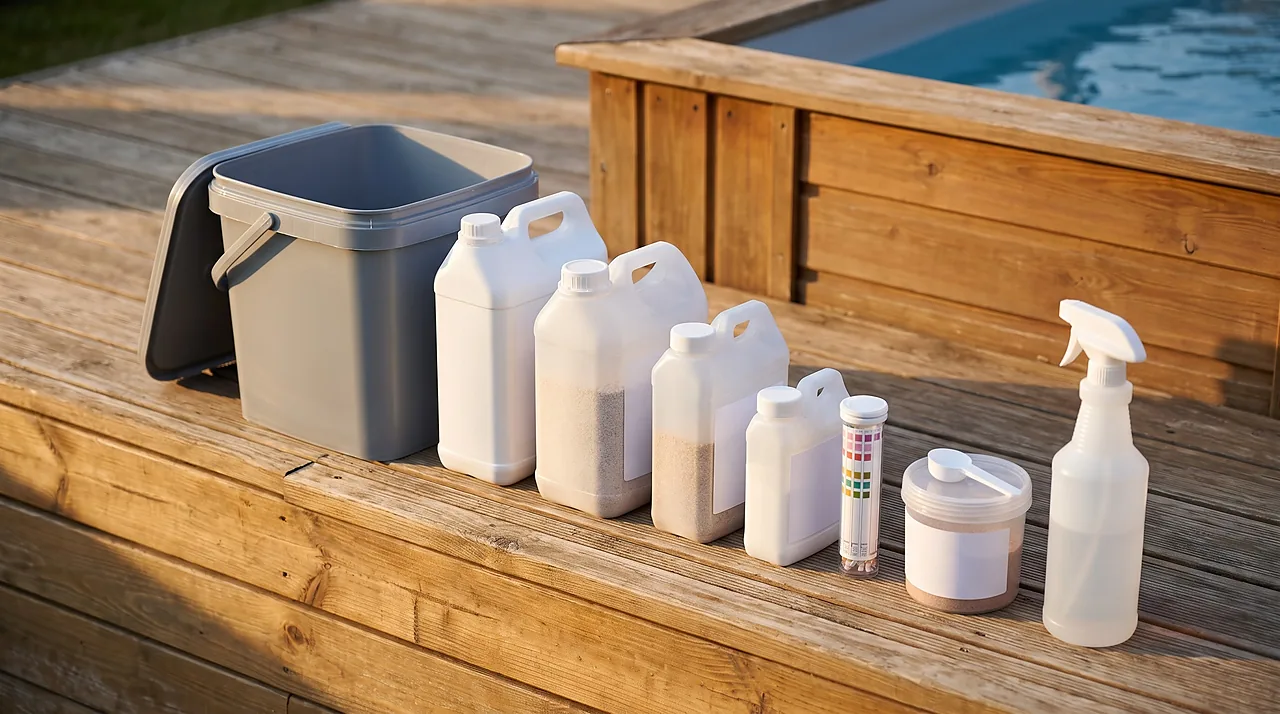
Somebody handed you a bucket. Inside it: a jug of granules, a smaller jug of different granules, test strips, a foam-looking bottle, maybe a scoop with no label at all, and zero instructions on which one you reach for on a Tuesday versus which one is for an emergency. That confusion is normal, and it is fixable in about the time it takes to read this page. Hot tub maintenance is not actually complicated. It is four rhythms, stacked on top of each other: something you glance at daily, something you test weekly, a couple of jobs you do monthly, and one bigger reset every few months. Once you see the rhythm, the bucket stops being a mystery and starts being four small piles.
The whole routine on one screen
- Daily: Look at the water and temperature before you get in.
- 2-3 times a week: Test sanitizer, pH, and alkalinity.
- Weekly: Adjust, shock or test-driven shock, rinse the filter every 1-2 weeks.
- Monthly: Filter chemical soak, cover check.
- Every 3-4 months: Purge lines, drain, clean, refill.
The daily glance: 30 seconds before you get in
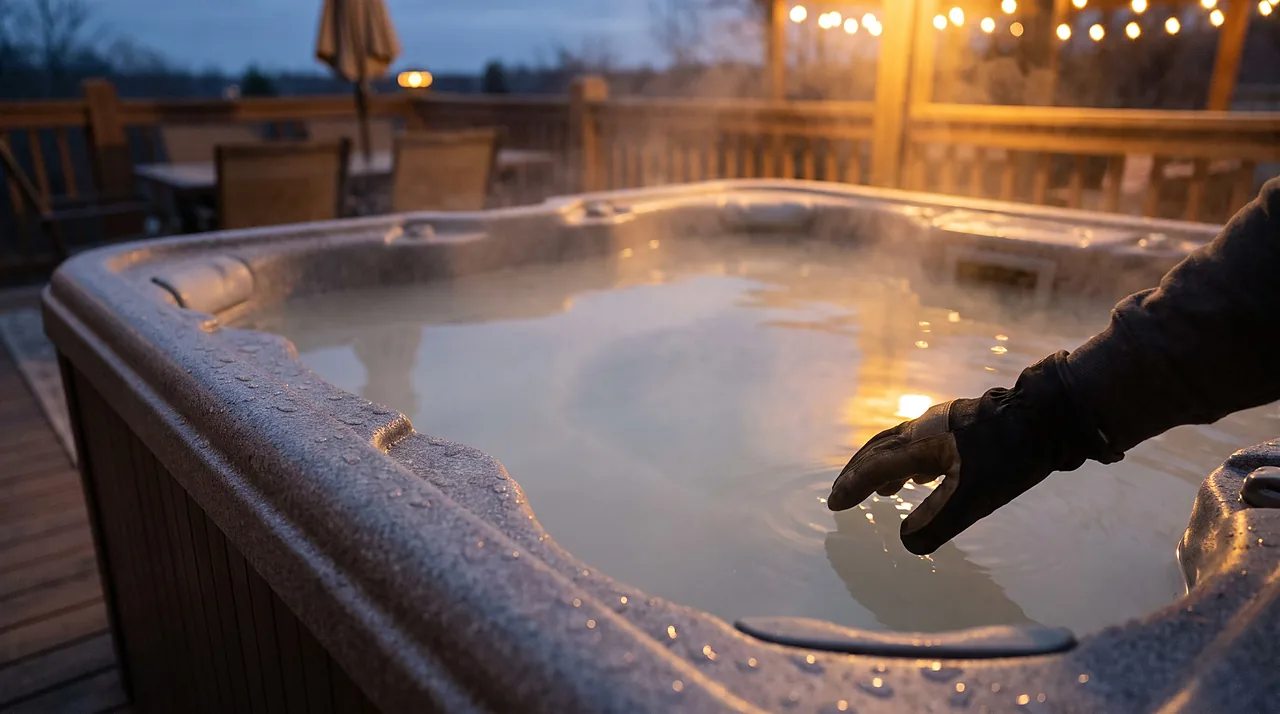
You do not need chemicals for this part. Before anyone gets in, look at the water. Clear all the way to the bottom is the pass condition; any haze, film on the surface, or a smell that hits you before you lift the cover means stop and check further before soaking. A strong chlorine odor is the one people misread most often: it means there is not enough free chlorine working, not too much. Combined chlorine, the spent byproduct left after sanitizer reacts with sweat, lotion, and body oils, is what actually smells sharp and stings eyes, and the fix is adding sanitizer or shocking, never backing off it.
Glance at the water temperature on the topside panel too. The safety ceiling is 104F, the maximum the CPSC sets for spas, and a typical comfortable set point is 100 to 102F. If you are pregnant or have a health condition, ask a doctor before soaking.
Twice a week and weekly: test, adjust, shock

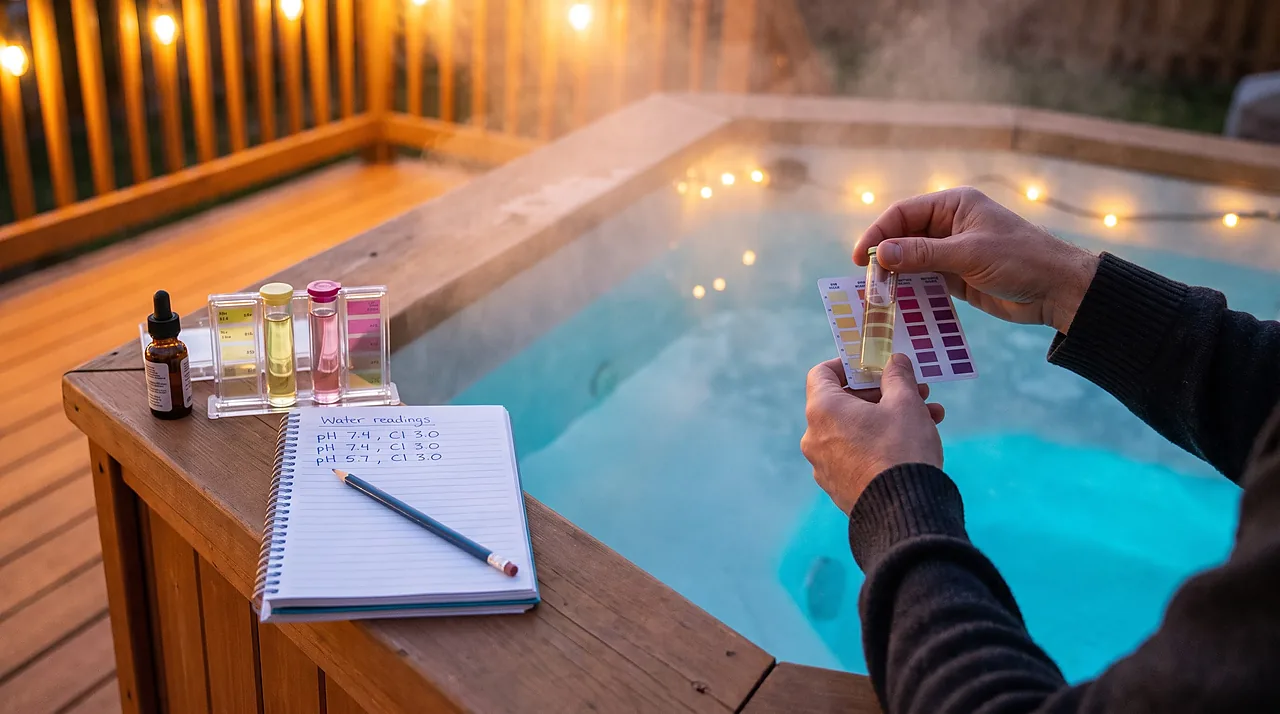
Test 2-3 times a week with a test strip or a proper reagent test, and do the full adjustment in order (alkalinity, then pH, then sanitizer) once a week or whenever a test is out of range. Total alkalinity is the pH buffer; if it drifts low, pH will not hold and will bounce around no matter how carefully you dose it, so alkalinity gets fixed before you touch anything else. The ranges to hold: total alkalinity 80-120 ppm, pH 7.2-7.8 (ideally 7.4-7.6), calcium hardness 150-250 ppm, and free chlorine or bromine at 3-5 ppm. That "alkalinity increaser" jug in your bucket, worth saying plainly, is baking soda, sodium bicarbonate, sold at a spa-supply markup over the box in your pantry. It works exactly the same either way.
Shocking works best as a weekly habit rather than something reached for only after cloudy water already shows up. A non-chlorine or chlorine shock oxidizes the combined chlorine and organic waste that plain sanitizing doses do not fully burn off, and a spa used regularly needs that oxidizer boost every week to keep ahead of bather load. Skip it for a few weeks and combined chlorine creeps up quietly until the smell and eye-sting show up, right when you were sure you were doing everything correctly. Owners who test often can shock when combined chlorine goes above 0.5 ppm or after heavy use instead of on a fixed day; the test is the real signal. For the full weekly test-and-adjust sequence with numbers you can act on immediately, a proper testing routine walks through it strip by strip, and how and when to shock covers dosing by gallon.
The monthly jobs: filter and cover, the two parts everyone forgets

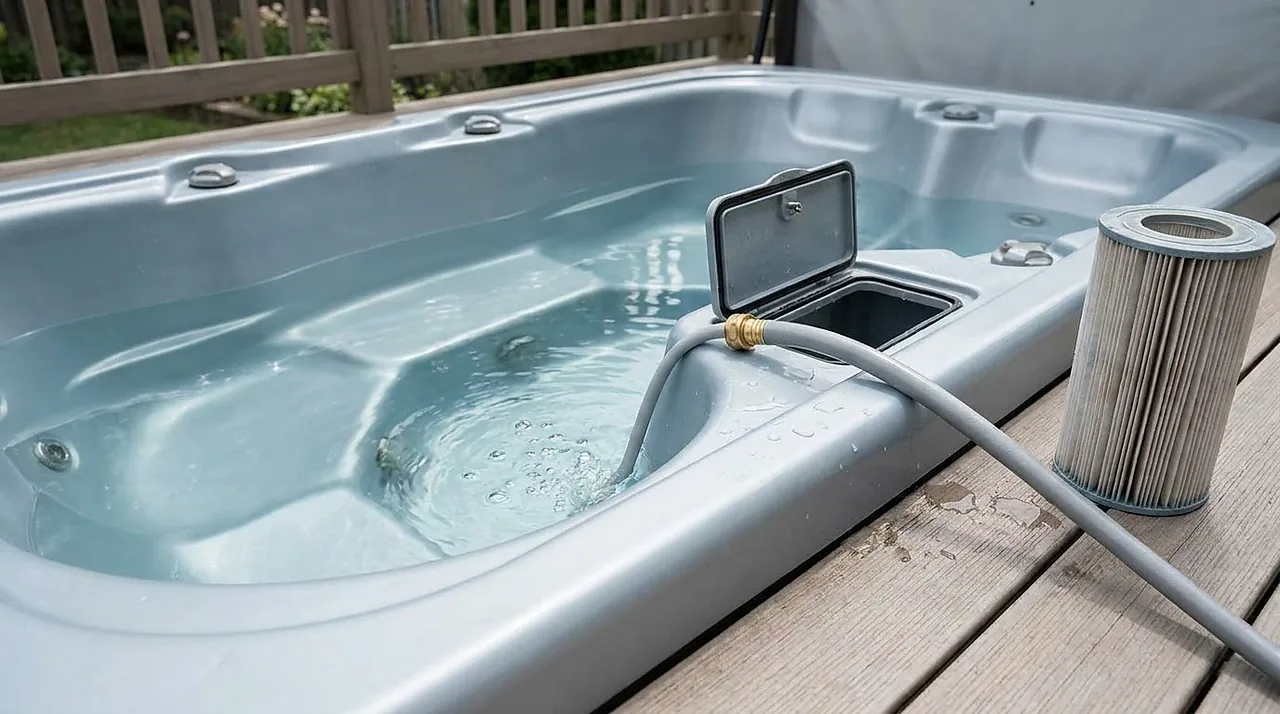
Pull the filter cartridge and give it a real rinse, working the spray between the fronds of the pleats instead of skimming across the top, every one to two weeks depending on bather load. Once a month, that same filter gets a chemical soak in a dedicated filter cleaner to dissolve oils and scale that a hose rinse cannot touch. A filter that is dirty or simply the wrong fit for the tub is one of the most common reasons a control system throws a flow-related fault, since the pump cannot pull water through cleanly. Plan on replacing the cartridge entirely somewhere between a year and two years of service; the full rinse-and-soak routine and the cadence behind it are worth a look before the first fault code shows up.
The cover gets the same monthly attention and almost never gets it. Wipe the vinyl down, check the seams for cracking, and lift a corner to feel for water weight. A cover that has absorbed water works like a wet blanket on your heating bill: it insulates far worse than a dry one, so the heater runs longer and more often to hold temperature, quietly inflating a running cost that is otherwise commonly $20-50 a month depending on climate, insulation, and local electricity rates. Cover care and cover-lifter setup covers what actually extends a cover's working life versus what just delays the inevitable.
The quarterly reset: drain, clean, refill

No amount of weekly testing replaces draining the water on a schedule, because dissolved solids, calcium, and (if you sanitize with dichlor) cyanuric acid all build up in a small volume of water that nothing filters back out. A rough rule of thumb: divide the spa's gallon capacity by 3, then divide again by the number of people using it regularly, and that gives you roughly the number of days before a full drain makes sense. A 400-gallon spa used by four people most days works out to about 33 days between drains under heavy use; lighter use stretches that out, which is why most owners land somewhere around every three to four months in practice. There is no single fixed answer for how long water can sit; the sanitizer level and what the test strip actually shows should carry more weight than the calendar date.
Before refilling, this is also the moment to inspect and, if the water has ever gone cloudy or foamed for no clear chemical reason, purge the internal plumbing with a dedicated line-flush product. Biofilm builds inside pipes and jets where a test strip cannot see it, and it is the reason chemistry sometimes reads perfect while the water still looks or smells off. A brand-new-to-you used tub gets this purge treatment on day one, before you trust anything else about it. The full drain-and-refill sequence, including how to get every gallon out without a built-in drain plug, lays out the order of operations.
The quarterly reset, at a glance
- Run the tub low on sanitizer for a day or two before draining, so you are not pumping a strong chemical mix into your yard.
- Drain fully; a submersible utility pump clears it faster than gravity through a garden hose.
- Wipe down the shell and jets with a non-foaming, spa-safe cleaner while it is empty and accessible.
- Rinse or soak the filter while the shell is empty rather than putting a dirty filter back into fresh water.
- Refill through the filter housing where possible to limit air in the lines, then balance alkalinity, pH, and sanitizer from scratch once the tub is full and circulating.
After a fresh fill: what goes in first
Once the spa is full, run the pump and let the water circulate before adding anything. Always balance the water before adding sanitizer. The correct order is alkalinity, then pH, then calcium if the fill water is soft, and finally sanitizer, with a short wait and retest between each addition. A used or new-to-you tub gets the line purge before the drain step so old plumbing biofilm is removed ahead of time.
What is actually in that bucket
Here is the part nobody explains before handing it over. Most bottles do one of four jobs, and once you sort them into piles, the bucket stops looking like a chemistry set and starts looking like a toolbox.
- Sanitizer (dichlor, or bromine tablets/granules). What it actually does: Kills bacteria and pathogens; the number you test for at 3-5 ppm. How often you reach for it: Every few days, sized to bather load.
- Shock (non-chlorine oxidizer, or chlorine shock). What it actually does: Burns off combined chlorine and organic waste, a separate job from sanitizing. How often you reach for it: Weekly, or right after heavy use.
- Alkalinity increaser. What it actually does: Plain sodium bicarbonate; raises TA to stabilize pH. How often you reach for it: Only when a test shows TA below 80 ppm.
- pH increaser / decreaser. What it actually does: Nudges pH into the 7.4-7.6 sweet spot, after TA is already correct. How often you reach for it: Only after alkalinity is dialed in.
- Calcium hardness increaser. What it actually does: Prevents soft, corrosive water from etching equipment; rarely needed with hard tap water. How often you reach for it: Occasionally, mostly with soft fill water.
- Filter cleaner / degreaser. What it actually does: Dissolves oils and scale a hose rinse cannot remove. How often you reach for it: Monthly soak.
- Line flush / pipe purge. What it actually does: Clears biofilm from inside jets and plumbing. How often you reach for it: Every drain, or immediately on a used/new-to-you tub.
If you sanitize with dichlor, one more thing belongs on your radar: dichlor carries cyanuric acid along with every dose, and in a small volume of hot water that CYA piles up fast enough to matter within a matter of weeks. A widely used fix from pool-and-spa water-chemistry practice is running dichlor only until CYA reaches roughly 30-40 ppm, then switching to plain unscented household bleach, which carries no CYA at all, for ongoing sanitizing. Dichlor versus bleach, and when to switch walks through the numbers behind that switch. One safety line that belongs in permanent memory regardless of which sanitizer you use: never mix chlorine and bromine products together, and never combine trichlor with dichlor in dry form. Both combinations carry a genuine fire and off-gassing risk that shows up in manufacturer safety data, so store sanitizers in separate closed containers.
When the routine tells you something is actually wrong
A schedule catches most problems before they become problems, but two situations move past routine maintenance and into troubleshooting. If the tub will not hold temperature or the heater will not fire at all, the control system almost always checks flow before anything else; a clogged filter or an airlock trips a flow fault long before the heating element itself is the culprit. Why a hot tub stops heating works through that diagnostic order, flow first, then the high-limit switch, then the element.
The second situation is electrical, and it is where DIY should stop at diagnosis. A 240-volt hard-wired spa needs its own dedicated GFCI disconnect, reachable, within sight of the tub, and positioned at least 5 feet away, per the National Electrical Code's spa and hot tub article. If a breaker or GFCI keeps tripping, that is worth understanding conceptually, since a heater element developing an earth leak is a common cause, but opening the equipment bay and testing 240V components yourself falls squarely under a licensed electrician's scope, well past routine maintenance. What the electrical setup actually requires covers the disconnect, breaker sizing, and where the line sits between homeowner-safe checks and calling a professional.
If you own an inflatable instead
Everything above applies to a softside or inflatable spa too, chemistry, filters, drain schedule, all of it, just on a faster clock. A smaller water volume with a weaker pump and filtration system swings out of balance quicker and shows fault codes for the same flow and airlock reasons a hard-shell tub does, so the daily glance and weekly test carry extra weight here. Run the same gallons-by-3-then-by-users math on a typical 250-gallon inflatable shared by two people and it works out to roughly 42 days between drains, meaning plenty of inflatable owners are effectively on a monthly drain schedule without ever having done the arithmetic. Inflatable and softside spa care covers the specific quirks, like a filter cartridge that clogs faster and a pump that airlocks more easily after moving the unit.