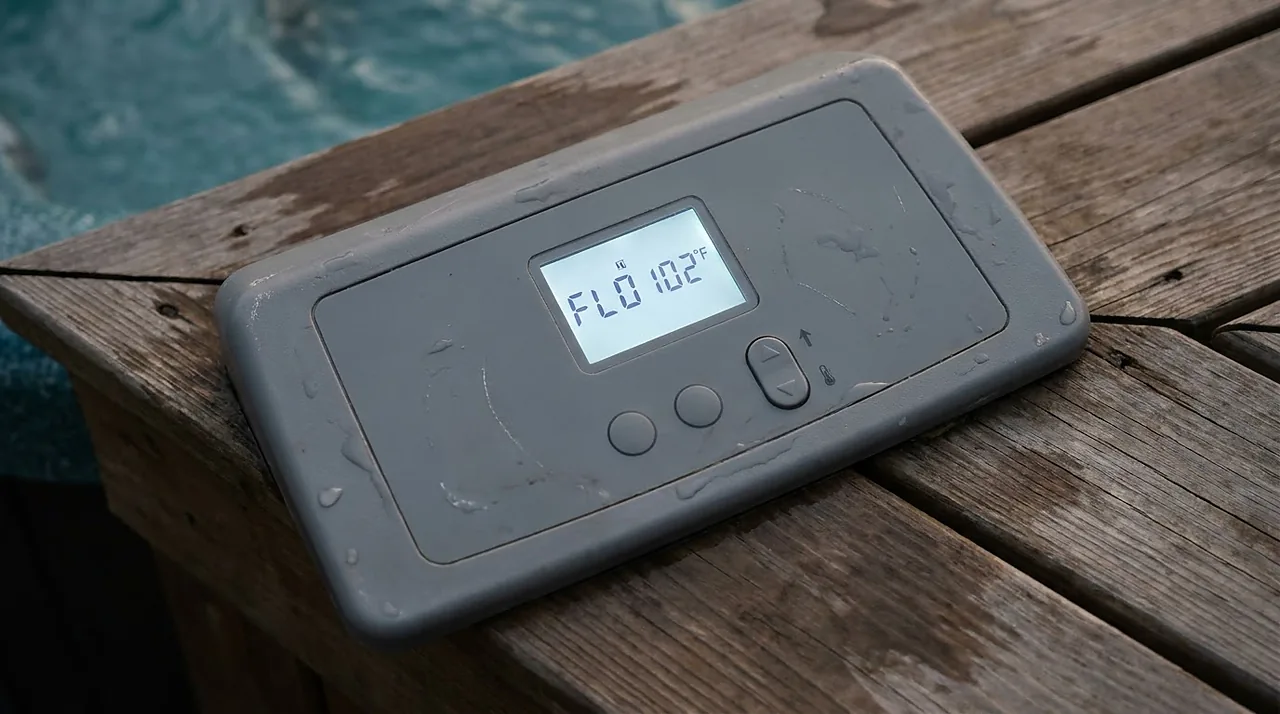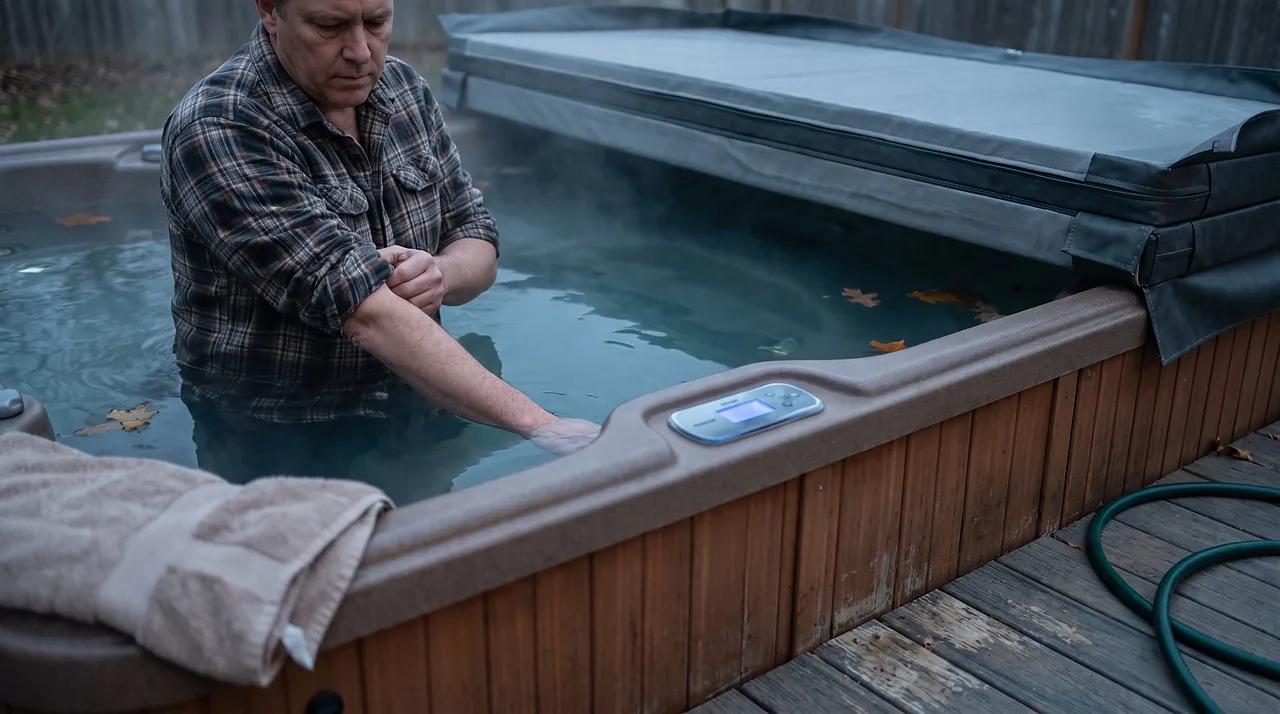
You lift the cover, dip a hand in, and the water is the same temperature it was yesterday. The display still says 102, the pump still runs, the jets still push water, but nothing is getting warmer. A service tech quoted you a flat-rate diagnostic visit just to look at it, plus parts. Before that call, there is a specific order to check three things, and most cold tubs get fixed at step one or two.
That order is flow, then the high-limit reset, then the heater element. Skip ahead and you risk paying to replace a part that was never actually broken, when the real problem was a filter you could have rinsed in five minutes.
Why the order matters: the heater cannot run on bad flow
Every hot tub heater sits inline with the plumbing, and the control system watches how much water is moving past it. If flow drops below a minimum threshold, the heater shuts itself off on purpose, a built-in safeguard: a heating element with no water moving past it can scorch itself in seconds. On a Balboa-run system, a low-flow condition is logged as one message and a full flow failure as a more serious one, and the two behave differently. A brief flow dip clears on its own once water starts moving again, typically within about a minute, while a sustained failure disables the heater outright until you clear the cause and reset the panel.
That single fact reorders the whole troubleshooting process. Chasing the heater element before you have ruled out flow is like replacing a car battery because the fuel gauge reads empty. Fix the actual restriction first.
First, a 30-second settings check
Confirm the set temperature on the panel is higher than the current water reading. Check that the tub is not in an Economy, Sleep, or Rest mode, which on many packs heats only during filter cycles. After a power cut, some panels come back in that mode or with a lower default set point.
Step 1: rule out flow (five minutes, no tools)

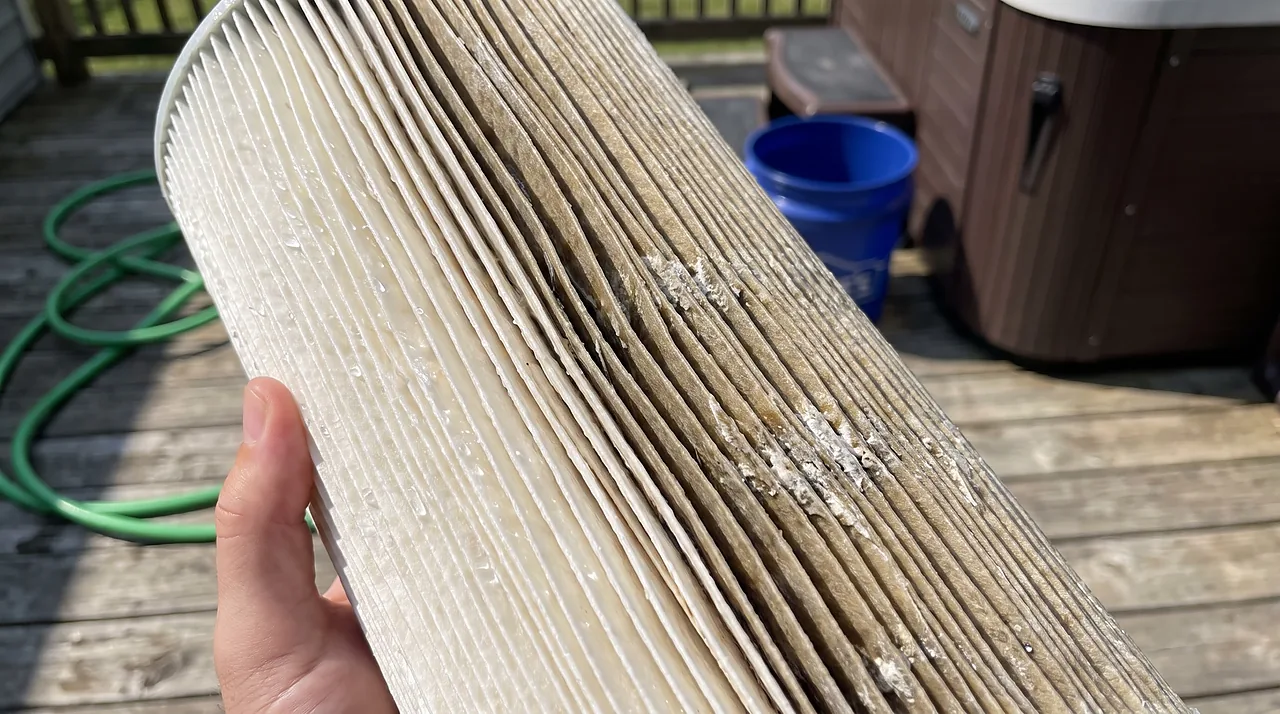
- Pull and rinse the filter. A clogged cartridge is the single most common trigger for a flow-related heater lockout. If it looks matted, gray, or slimy, that is your answer; give it a full cleaning done properly, since a clean filter keeps the flow-blame off the table for several weeks at a stretch.
- Check the water level. Water below the skimmer or intake lets the pump pull air instead of water. A single air bubble reaching a flow sensor can trip the heater instantly. Top off to the middle of the skimmer opening or the line marked on the shell.
- Look for a closed valve or a jet turned fully off. Some systems route water through a valve that, if bumped shut, starves the heater even with everything else fine.
- Burp an airlock. After a drain and refill, trapped air in the pump housing can mimic a flow failure for hours. Loosening the pump union briefly until water dribbles out, then retightening, clears most airlocks; the same fix applies whenever a pump runs but never seems to grab water after a refill.
Every one of these is exactly what the flow-fault documentation itself points to: water level, suction restriction, valve position, trapped air, and jet settings, checked in that order before you assume a part has failed. If the pump is also making noise, straining, or cavitating while you check this, that is worth chasing separately, since a struggling pump can both cause and mask a flow problem.
Step 2: the high-limit reset (two minutes)

If flow checks out clean and the tub still will not heat, look at the panel for a fault code or a blinking temperature reading before touching anything else. Many systems trip a high-limit safeguard even when the water in the tub itself feels lukewarm, because the sensor sits inside the heater tube, where water can superheat locally if flow was marginal even for a few seconds. On many Balboa-controlled tubs, one threshold shuts the heater down at 110F and clears itself automatically once the water drops back under 108F; a second, more serious sensor at 118F shuts the whole spa down and needs a manual reset, usually done by pressing any button on the topside panel once the water has cooled. Some spa packs also have a physical red reset button on the heater housing inside the equipment bay. Turn power off at the disconnect before opening the bay, press the button, close up, and restore power. If it trips again soon, that points back to flow or a sensor, and repeated trips are a technician call.
This is the step people skip because it feels too simple, and it is also the step that fixes the most tubs that were merely a false alarm from a flow blip an hour earlier. If the panel is showing an actual fault code alongside the stalled temperature, stop guessing and match the code exactly, since the letter-number combination on the screen tells you which of several different faults you are actually looking at. And if resetting the panel itself feels unfamiliar, the reset sequence varies enough between brands that walking through the correct button sequence for your specific control beats guessing at combinations.
Step 3: the heater element (this is where the electrician or tech comes in)

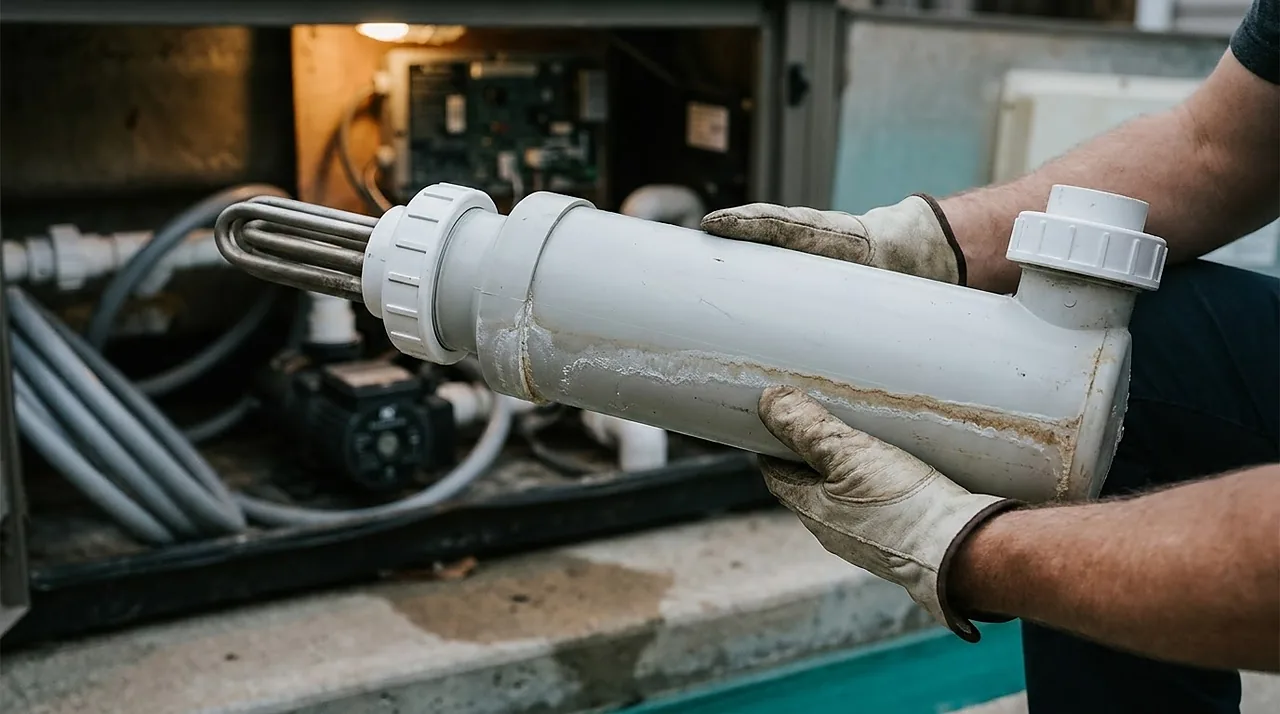
If flow is confirmed good and the high-limit has been reset with no fault re-triggering, and the tub still runs cold, the element itself is the remaining suspect. A heater element can fail two ways: it burns out completely (no heat, ever, flow or no flow), or it develops a small internal breach that lets current leak to ground, which usually shows up as the breaker or GFCI tripping under load rather than as a temperature complaint at all. A tripped breaker alongside the cold water is its own branch of the problem. A breaker that trips specifically when the heater tries to fire points at the element's insulation rather than the flow path, and a GFCI that won't hold once the heater engages is close to a textbook sign of exactly that failure.
Here is the DIY line. Verifying flow, checking the water level, resetting a high-limit, and reading a fault code are all safe, tool-free, no-cover-off tasks. Testing a heater element with a meter, pulling the element itself, or doing anything past the control panel's plastic housing is 240V work behind a wet enclosure, and that is where a licensed electrician or spa technician takes over. Before the tech arrives, it is worth locating the tub's own emergency disconnect, the switch or breaker that a code-compliant install keeps within sight of the tub but never closer than 5 feet, so power can be cut fast if anything looks or smells wrong while the cover is off. A tech can confirm with a continuity or amp-draw test whether the element is the failure, which is a cheaper way to find out than guessing by replacing parts.
Slow to heat and not heating at all are different problems
An owner who says "it's not heating" is sometimes describing a tub that gains half a degree an hour instead of the expected two, and sometimes describing one that has been stuck at the same number for three days. Those are not the same failure tree.
Temperature climbing, just slowly
Most likely cause: Undersized heater relative to volume, a leaking or waterlogged cover losing heat as fast as it's made, or ambient/wind exposure. Where to look: a slow-heat diagnosis runs through a separate set of causes, mostly heat retention rather than a hard fault.
Temperature flat, unchanged over hours
Most likely cause: Flow fault, high-limit trip, or a fully dead element. Where to look: the three-step order above.
Heats fine, then drops back down between uses
Most likely cause: Cover left open, filter cycle set too short, thermostat set point lower than expected. Where to look: check the programmed set point and filtration schedule on the panel before assuming a hardware fault.
Cold water plus a tripped breaker
Most likely cause: Heater element earth leak, GFCI nuisance trip, or a pump/blower fault sharing the circuit. Where to look: isolate the breaker issue first, since heat only comes back once the circuit holds.
Inflatable or 120V plug-in tub barely heating
Most likely cause: Heater pausing while the bubbles or jets run, a cover off or no ground insulation, or cold weather outpacing a small heater. Where to look: an inflatable tub that will not heat.
A genuinely dead heater and a cover that has been silently soaking up water for a season can produce a similar complaint from the owner's chair, and only the actual water temperature over time tells them apart. If you have a thermometer reading that climbs, even slowly, the heater itself is probably fine and the fix lives in retention or scheduling rather than anywhere in the heater's own diagnostic tree.
What to do before you call for service
Run through steps 1 and 2 above and write down what you find: filter condition, water level, whether a fault code appeared and which one, and whether the panel reset held or the same fault came right back. That five minutes of notes turns a flat-rate diagnostic visit into a much shorter, cheaper repair call, because the tech shows up already knowing flow and the high-limit are not the culprit. If it does turn out to be the element, get the real number before agreeing to anything: parts and labor for a heater element swap run in a fairly predictable range, and knowing that range before the tech arrives keeps the conversation about the actual bill.
One more thing worth ruling out while you are already checking equipment: if the tub uses an ozone system alongside the heater and both feed off the same circulation pump, a stalled ozonator will not stop the tub from heating. It is a fast thing to check while the equipment bay is already open, and the two get confused often enough that it is worth the extra thirty seconds.
Keep 104F as the hard ceiling on this whole troubleshooting process. The CPSC's warning exists because water above that point carries a real heat-illness risk, so a heater that comes back on and overshoots the set point deserves the same urgency as one that never comes back on at all. Fix the cause, confirm the panel holds a normal reading, and only then call the tub done.