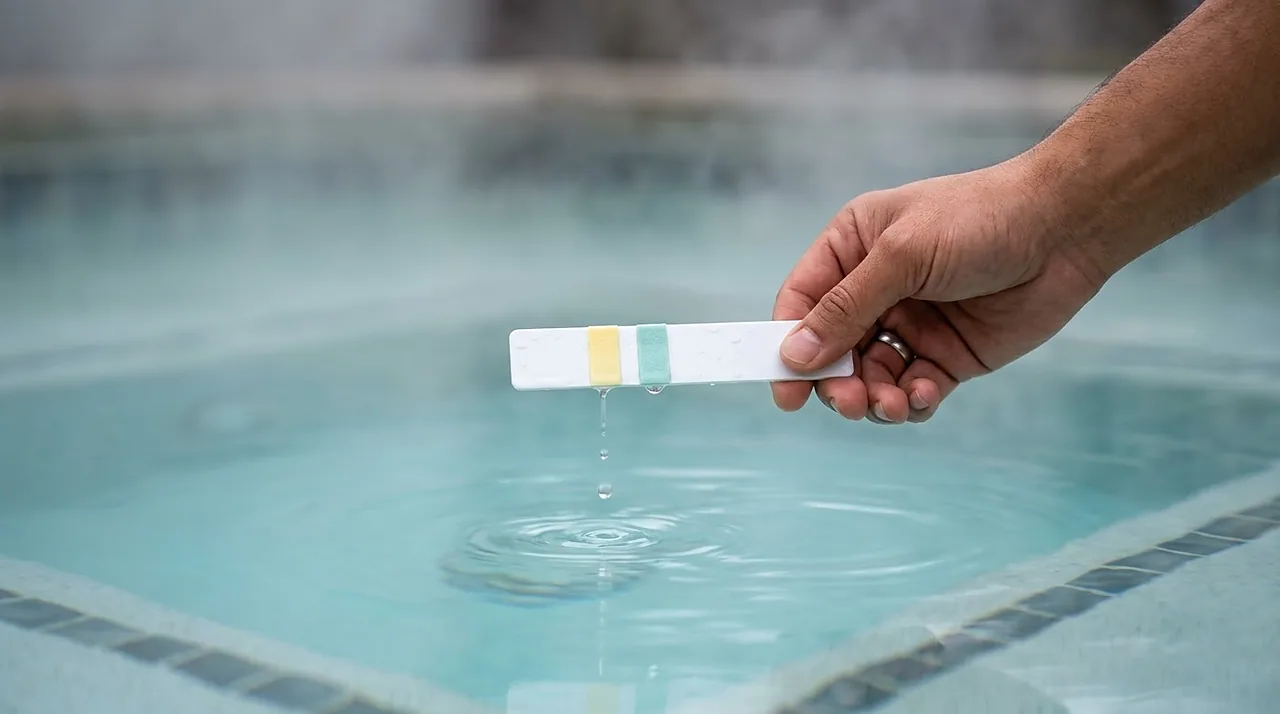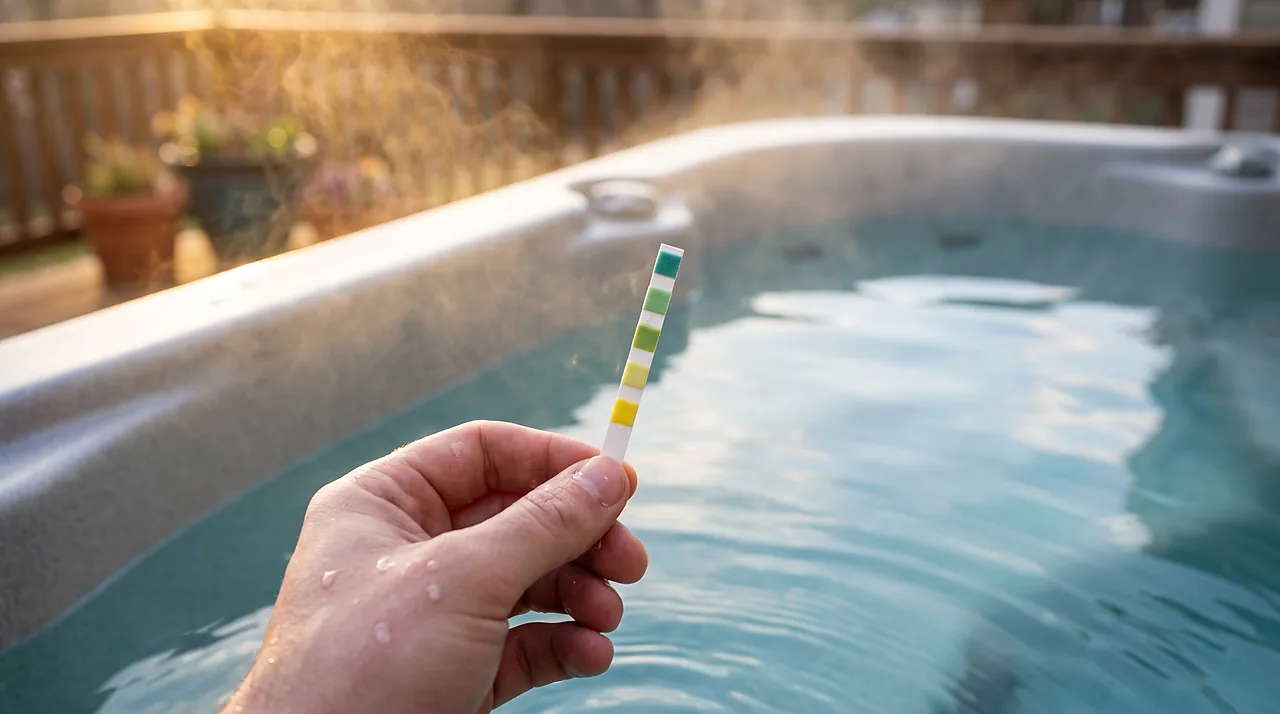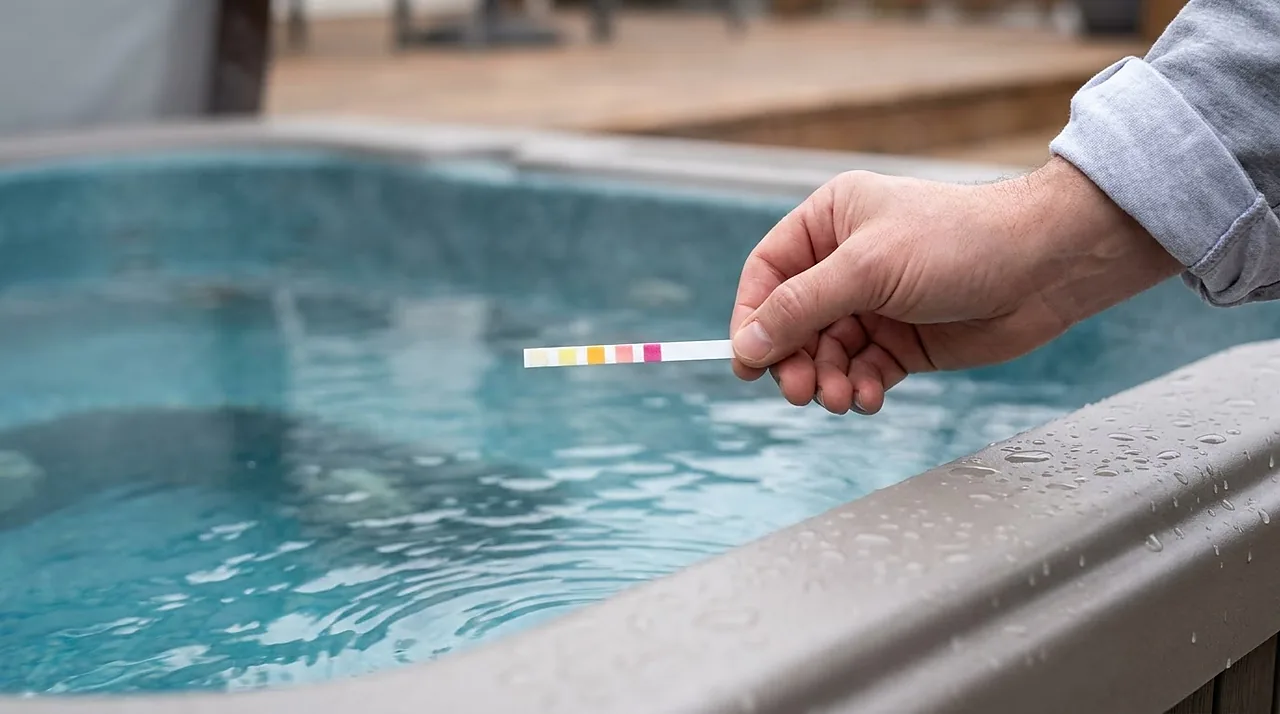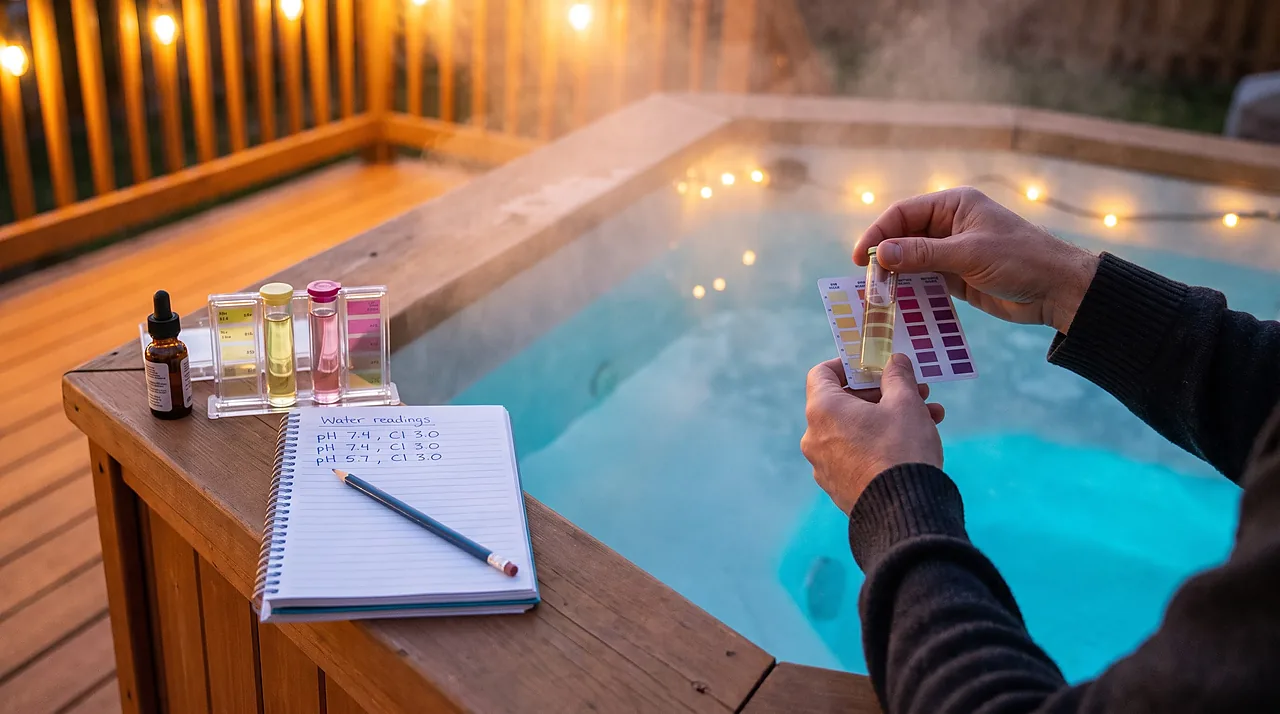
Somebody posted it in a hot tub forum a while back, and it stuck: if anyone had told them they'd need a chemistry degree just to keep the water clear, they never would have bought the thing. Fair complaint. Except the truth is smaller than that. A hot tub's water only runs on five numbers, and once you know what each one does and which order to fix them in, the whole "PhD in chemistry" feeling mostly goes away.
Those five numbers are sanitizer, pH, total alkalinity, calcium hardness, and cyanuric acid. Ranked by how much trouble they cause you if they're wrong, that's roughly the order too: sanitizer first because it's the safety number, pH second because it decides comfort and how hard your sanitizer has to work, alkalinity third because it's the buffer holding pH still, hardness fourth because it plays the long game with your equipment, and cyanuric acid last because most owners never touch it directly, it just piles up as a side effect of one sanitizer choice.
The five numbers, at a glance
Here is the whole board in one table. Ranges below reflect spa-specific guidance where a source distinguishes spas from pools; where it doesn't, the pool figure is close enough to use.
- Sanitizer (free chlorine, or bromine)
- Target for a spa: 3-5 ppm free chlorine, or 3-5 ppm bromine. What it actually does: Kills bacteria and viruses in real time, right now, in the water you're about to sit in. When to fix it: Check before every soak.
- pH
- Target for a spa: 7.2-7.8, aim for the 7.4-7.6 middle. What it actually does: Controls comfort (stinging eyes, itchy skin), corrosion or scaling of metal parts, and how efficiently your sanitizer actually works. When to fix it: Adjust only after alkalinity is settled.
- Total alkalinity (TA)
- Target for a spa: 80-120 ppm. What it actually does: Acts as the buffer that keeps pH from swinging every time you add chemicals or the jets run. When to fix it: Fix this one first, before you touch pH.
- Calcium hardness
- Target for a spa: 150-250 ppm. What it actually does: Too low and the water goes after your metal fittings and heater; too high and it deposits scale on the heating element and shell. When to fix it: Test monthly; correct with a drain and partial refill or a hardness product.
- Cyanuric acid (CYA)
- Target for a spa: Ideally kept low; watch it if you use dichlor regularly. What it actually does: Shields chlorine from breaking down in sunlight, but it also ties chlorine up as it accumulates. When to fix it: Track it if you use dichlor daily; it never goes down on its own.
Notice that "fix order" and "importance order" aren't quite the same list, and that trips people up. Sanitizer matters most because it's the one number tied to actual safety. But when you're standing there with a test kit and three numbers are off, you fix alkalinity before pH, every time, because alkalinity is what holds pH in place once you get it there. Dose pH first on unstable alkalinity and you'll be back in an hour chasing the same number again.
Sanitizer: the number that can't wait
Free chlorine (or bromine, if that's your system) is the only number on this list doing active work against bacteria at the moment you're testing it. Everything else is water balance, useful and important, but on a slower clock. Keep it in the 3 to 5 ppm range and test it right before getting in, since a level that looked fine the night before can drop overnight.
Here's the myth worth killing outright: a strong chlorine smell does not mean too much chlorine. It means the opposite. That sharp, eye-stinging odor comes from combined chlorine (chloramines), which is spent chlorine still stuck to ammonia and organic waste from skin, sweat, and lotion. It stopped sanitizing and started smelling. The fix is more sanitizer, delivered as a shock, not less. This distinction between free and total chlorine is the single most misunderstood number in the whole hobby, and it gets its own full breakdown in how free chlorine differs from total chlorine and why the gap between them matters.
If your free chlorine reads fine one day and vanishes by the next soak, that's usually a cyanuric acid problem locking the chlorine up, or a bather-load spike that outran your dose; why chlorine won't hold in a hot tub walks through both causes. And if you're staring at a reading that seems impossibly high, what to do when hot tub chlorine tests too high covers the actual overdose case, which is rarer than owners assume. The smell complaint gets its own dedicated answer too, at why a hot tub smells like chlorine even when the level looks low.
One safety line worth stating plainly here: never mix chlorine and bromine granules together, and never mix trichlor with dichlor in dry form. Combining strong dry oxidizers like this is a genuine fire and reaction hazard, the kind product labels and the CPSC warn about directly. Add one sanitizer at a time, to water, never chemical to chemical.
pH: comfort, corrosion, and why it drifts up on its own
An acceptable pH range is 7.2 to 7.8, per the Pool & Hot Tub Alliance's water balance guidance, with most technicians aiming for the tighter 7.4 to 7.6 band because that's closest to the pH of human eyes and skin. Drift low and the water turns corrosive toward metal heater parts and plumbing. Drift high and chlorine gets lazier at killing things, plus you start seeing cloudy water and scale.
Hot tubs push pH upward almost by design. The constant aeration from the jets drives dissolved carbon dioxide out of the water, and losing CO2 raises pH, the same chemistry behind a glass of soda going flat and less acidic as it sits open. That's why spa pH usually needs pulling down, and why chasing it daily without fixing alkalinity first turns into a losing game. A closer look at why hot tub pH drifts and how to pin it down covers the dosing steps. If you're dealing specifically with a reading that's dropped too far, what to do when hot tub pH tests too low has the correction.
One testing quirk worth knowing: don't test pH right after shocking. Very high chlorine throws off both pH and alkalinity readings, so wait a few hours after a shock dose before you trust a strip or drop test.
Total alkalinity: the buffer that decides whether pH behaves

Total alkalinity's acceptable range runs 60 to 180 ppm broadly, but for a spa the tighter 80 to 120 ppm window is the practical target, and PHTA's own guidance notes that keeping alkalinity toward the lower end of the acceptable band helps offset gradual calcium buildup and slows the pH creep that comes from CO2 escaping the water. Low TA is what causes "pH bounce", where the number swings wildly after every dose or every session with the jets running. High TA makes pH stubborn and hard to move in either direction.
Here's the part dealers don't advertise: the "alkalinity increaser" sold at a markup is plain baking soda, sodium bicarbonate, the same box sitting in your kitchen cabinet. Same chemical, same effect, usually a fraction of the price bought as a bulk food-grade product. How to raise alkalinity with baking soda, and how much it actually costs versus the branded increaser breaks that math down. Lowering alkalinity runs the other direction, dry acid added in small steps with aeration between doses, and that whole process lives at raising and lowering hot tub alkalinity and stopping the pH bounce.
Calcium hardness: the number that works on a longer clock
Calcium hardness should sit in the 150 to 250 ppm range for spas, according to Taylor Technologies' water-balance guidance, noticeably lower than the 200 to 400 ppm window recommended for pools. Nobody chases this number weekly the way they chase sanitizer, but ignore it for months and you'll pay for it. Too low, and the water goes looking for calcium elsewhere, pulling it out of your heater and metal fittings, which is corrosion you can't see happening until it's expensive. Too high, and calcium drops out of solution onto the hottest surface in the tub, which is the heating element, forming scale that insulates it and makes the heater work harder to do the same job.
The counterintuitive case that trips people up: if your fill water comes from a home softener, it's low in calcium by design, and a softened fill often needs hardness added on purpose, the opposite of what most owners assume a "hard water problem" looks like. That whole picture, including the low-versus-high symptom tiers, is covered at calcium hardness in a hot tub, the forgotten number. Epsom salt (magnesium sulfate) is sometimes marketed for a softer soak feel, but it isn't a water-balance chemical and it doesn't touch calcium hardness at all; what Epsom salt actually does and doesn't do in a hot tub covers that distinction honestly.
Cyanuric acid: the quiet one that only shows up if you use dichlor
Cyanuric acid (CYA) is the number most spa owners never test because it isn't on a basic five-way strip, and honestly, plenty of tubs never need to think about it. It only becomes relevant if your sanitizer of choice is dichlor, the stabilized granular chlorine that's genuinely convenient for a fresh fill or an occasional dose. Every ppm of free chlorine dichlor adds comes bundled with about 0.9 ppm of cyanuric acid riding along, per the ANSI/APSP-11 standard cited by PHTA. Trichlor adds a bit less, around 0.6 ppm CYA per ppm of chlorine. Either way, that stabilizer never leaves on its own. It only goes down when you drain water out and dilute it with fresh.
The trouble is that CYA's job (shielding chlorine from sunlight breakdown) works against you once it climbs, because higher CYA also slows chlorine's actual killing power at the same free-chlorine reading. Public-health guidance for spas tends to be more cautious about cyanuric acid than the pool-industry range you'll see quoted elsewhere, largely because a spa's small volume concentrates it fast and an indoor or lightly-used tub gets little benefit from sun protection anyway. Many working technicians switch a daily-dosed tub away from dichlor once CYA climbs past roughly 30 to 40 ppm, moving to plain liquid bleach (unscented household chlorine, no stabilizer attached) to stop adding more, then draining on the normal schedule to bring the existing CYA back down. The full startup chemical lineup for a fresh fill covers where dichlor fits into that first week, and total dissolved solids and why old water eventually just needs draining covers the related number that climbs alongside it.
Two more numbers worth a passing mention, both handled elsewhere so this pillar doesn't sprawl: phosphates, which feed algae growth even in a well-sanitized spa and get their own page at phosphates in a hot tub, what they are and when to worry about them, and the testing method itself, since a number is only as good as the tool reading it, covered at reading hot tub water tests, strips versus drop kits.
How much to actually add: a dosage method you can run for your own gallons

Every chemical bottle says "add as needed" and leaves you guessing. Here's the math those bottles skip, built from two dosing constants that hold up across the trade regardless of brand: baking soda (sodium bicarbonate) raises total alkalinity at roughly 1.5 lb per 10,000 gallons for every 10 ppm you want to add, and 56%-strength dichlor raises free chlorine at roughly 2.4 oz per 10,000 gallons for every 1 ppm you want to add. Scaled down to spa-sized volumes, that becomes:
- Baking soda (oz) = 0.24 x (your gallons / 100) x (ppm rise wanted / 10)
- Dichlor 56% (oz) = 0.024 x (your gallons / 100) x (ppm rise wanted)
Both formulas assume the stated product strength exactly. Read your label first: dichlor concentration commonly runs anywhere from about 50% to 65% available chlorine, and a weaker product needs proportionally more to hit the same ppm. When in doubt, dose to roughly three-quarters of the calculated amount, wait the retest window on your product label, then top off based on what the water actually shows.
- 200 gallons (small inflatable)
- Baking soda to raise TA by 30 ppm: 1.4 oz (about 3 level tablespoons). Dichlor (56%) to raise free chlorine by 5 ppm: 0.24 oz.
- 300 gallons
- Baking soda to raise TA by 30 ppm: 2.2 oz (about 4 level tablespoons). Dichlor (56%) to raise free chlorine by 5 ppm: 0.36 oz.
- 400 gallons
- Baking soda to raise TA by 30 ppm: 2.9 oz (about 6 level tablespoons). Dichlor (56%) to raise free chlorine by 5 ppm: 0.48 oz.
- 500 gallons (larger acrylic spa)
- Baking soda to raise TA by 30 ppm: 3.6 oz (about 7 level tablespoons). Dichlor (56%) to raise free chlorine by 5 ppm: 0.6 oz.
Worked example: a 380-gallon spa needs total alkalinity nudged up 40 ppm (say, from a soft 50 ppm to a settled 90 ppm) and free chlorine brought up 4 ppm for a fresh startup dose. Baking soda works out to 0.24 x 3.8 x 4, which is about 3.6 oz, roughly seven level tablespoons. Dichlor works out to 0.024 x 3.8 x 4, about 0.36 oz, a small level scoop. That same dichlor dose also adds close to 3.6 ppm of cyanuric acid to the water, since dichlor carries roughly 0.9 ppm CYA for every ppm of chlorine it delivers, which is exactly the accumulation described above and the reason that number is worth tracking once this becomes a daily habit instead of a one-time startup dose.
These two formulas cover the two most commonly hand-dosed adjustments. pH correction runs on a different curve because the right acid or soda-ash dose depends heavily on the current alkalinity reading, so that dosing sequence gets its own full walkthrough elsewhere.
How to add chemicals without wasting them
- Keep the jets or circulation pump running and the cover open so the water circulates and gases escape.
- Add one product at a time.
- Pre-dissolve granules in a bucket of tub water, and never dump dry granules on the shell or into the filter well unless the label says so.
- Wait for a full circulation cycle before adding the next product.
- Retest before the next dose.
- Never mix products together in the bucket.
Can a hot tub run without chemicals?
No, warm still water shared by people needs a sanitizer residual to stay safe and sanitary. Ozone, UV and mineral systems reduce how much sanitizer is needed, but they do not replace it (see ozone, UV and mineral systems compared). Even a salt system is still chlorine, made by a cell from salt; how a salt water tub works explains the cell.
Water hot enough to matter: the one safety limit that overrides all five numbers
None of this water balance work matters if the temperature itself is unsafe. The CPSC's standing guidance, in place since 1979, holds that hot tub water should never exceed 104 F. At 106 F, the agency has linked prolonged soaking to heat stroke in adults. Most control panels cap out at 104 F for exactly this reason, and a typical comfortable set point sits around 100 to 102 F, well under the ceiling.
Balanced chemistry and safe temperature are the two non-negotiables. Everything else on this page is about keeping the water pleasant and your equipment intact for the long run.