Somewhere between 2,000 and 3,000 parts per million of dissolved salt is what a typical drop-in cell needs sitting in the water before it can make a usable amount of sanitizer. That number matters because it's the whole story behind "salt water hot tub" marketing: the cell is not removing chlorine from the equation, it's manufacturing chlorine from the salt, in the tub, on a schedule you set. Owners who buy a conversion expecting to stop dealing with chlorine are usually disappointed within a season. Owners who buy it expecting a small onboard dosing machine tend to like it a lot.
What the cell is actually doing to the water
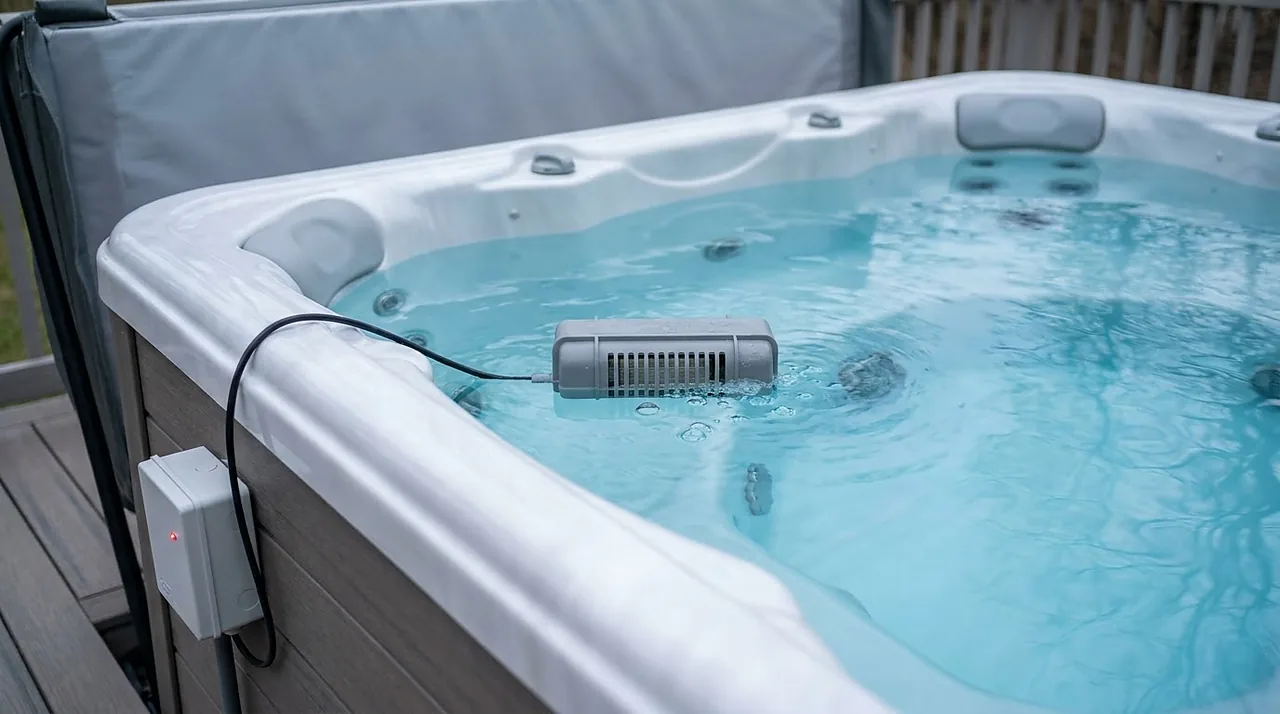
A salt cell is a pair of metal plates that a low-voltage current runs through while they sit submerged. That current splits the dissolved sodium chloride (table salt) apart and reassembles the chlorine ion into hypochlorous acid, the same active sanitizer molecule that comes out of a jug of liquid chlorine or a scoop of dichlor granules. Once it has done its job killing bacteria, the chlorine reverts back toward salt, and the cell converts it again. It's a loop, not a one-time treatment.
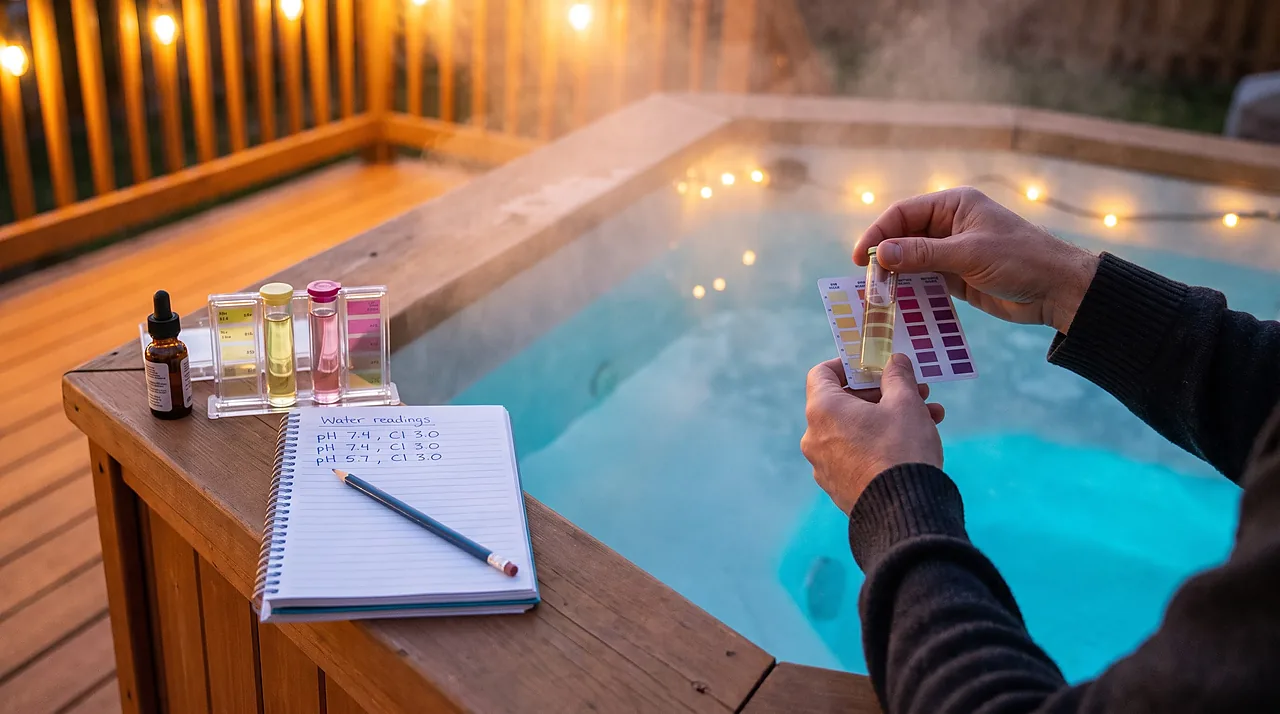
Per a manufacturer's own operating manual, a small residential cell is designed to hold free chlorine around 2.0 to 4.0 ppm, with 3.0 to 4.0 ppm called out as the target band, while the water sits at a salt concentration of roughly 2,000 to 3,000 ppm and a pH of 7.2 to 7.8. Those numbers should look familiar: they're the same free-chlorine and pH ranges you'd chase by hand with dichlor and a test kit. The salt system doesn't change the target. It changes who's doing the dosing between your test days.
That's the myth worth retiring. "No chemicals" describes the marketing copy far better than it describes the chemistry actually happening in the water. You've swapped hand-dosing chlorine for salt that gets converted into the same chlorine automatically. You still own a chlorinated hot tub, and it still needs a total-alkalinity check, a pH check, and periodic shock, exactly like a hand-dosed one covered in the full water chemistry basics.
What owners actually like about it
The main appeal for most owners is steadier chlorine levels, since the cell adds a small amount continuously instead of delivering sanitizer in spikes after each soak. When the output is dialed in properly, that steady dosing leads to fewer chloramine smell swings and leaves the water feeling noticeably softer on skin. There are also no jugs of liquid chlorine or granular bottles to buy, haul, and store for everyday sanitation. These perks come down to real convenience and personal comfort, however, rather than a tub that runs without chemicals.
How much salt, and what a conversion runs

A 350-gallon tub converted with a small drop-in cell typically needs somewhere in the neighborhood of 6 to 10 pounds of plain, non-iodized, additive-free pool or spa salt to reach the target concentration from a fresh fill. Manufacturer dosage charts exist precisely so you don't have to guess: you look up your gallon count against your current salt reading and add the difference. Once you're at the target level, you don't top it up again until you drain and refill, because salt doesn't evaporate or get consumed. Only water loss concentrates it further, which is why a heavily splashed, frequently topped-off tub eventually needs to be tested and, occasionally, partly diluted back down.
Cost varies by how the system is installed. A small, portable, drop-in cell and control box that clips onto the side of the shell is a weekend DIY project for most owners and sits toward the low end of a roughly $500 to $5,000 range that conversion kits span overall. A fully plumbed, in-line system wired into the equipment bay and professionally installed by a dealer runs toward the top of that range once labor is included, with both approaches covered in converting a tub to salt step by step. Either way, the ongoing cost is salt (cheap) plus the same pH and alkalinity adjusters a hand-dosed tub uses, plus the cell itself as a wear part typically replaced every two to five years for around $100 to $500.
That last piece is the one the marketing tends to skip.
Cell lifespan and the cold-weather cutoff

Salt cells are consumables. The plates slowly scale and erode with use, and a hot tub's small water volume and high bather load push that wear faster than it happens in a swimming pool, where cells commonly last several years. Manufacturers instruct owners to pull the cell every few months, check the plates for a white, sugar-like scale deposit, and soak it in a diluted acid bath if scale has formed, the standard process for cleaning a salt cell. A cell that's visibly pitted, cracked, or no longer producing chlorine even at maximum output is at the end of its service life and gets replaced as a part, since there's nothing inside worth repairing.
Cold water is the other limit owners get caught by. One manufacturer's manual is direct about it: don't run the cell at all once the water drops under 65F (15C), and don't run it above 110F (45C) either. Below the low cutoff, electrolysis in cold water is inefficient enough that the unit simply won't reliably produce sanitizer. The control box then flags a low-salt-style warning even when the salt level is fine. That's a real problem for anyone who keeps a tub running through a genuine winter in a cold climate, because the exact season when you most need a working sanitizer system is when a plug-in cell may be refusing to do its job. In practice this pushes cold-climate owners toward either a bigger built-in cell rated for lower temperatures, or a fallback plan of hand-dosed chlorine for the coldest stretch of the year.
How long or how high to run the cell
Depending on the unit, output is set as an operating percentage or as hours of production per day. Start at the setting the manual suggests for your spa's water volume, then adjust by test results, aiming to hold 3 to 5 ppm of free chlorine. Turn the setting up or run a boost cycle after heavy use, and turn it down if the reading keeps creeping high. Because the cell only makes chlorine while water flows through it, the tub's pump schedule directly affects total sanitizer production.
- What sanitizes the water
- Salt system: Hypochlorous acid made on-site from salt. Hand-dosed chlorine: Hypochlorous acid from dichlor or liquid chlorine you add. Which wins: Same chemistry either way.
- Daily hands-on work
- Salt system: Low, once dialed in. Hand-dosed chlorine: Regular, small additions. Which wins: Salt system, for convenience.
- Upfront cost
- Salt system: Roughly $500 (drop-in) to $5,000 (built-in, installed). Hand-dosed chlorine: Cost of a test kit and a jug of chlorine. Which wins: Hand-dosed, for upfront cash.
- Cold-weather reliability
- Salt system: Cuts out below roughly 65F on many small units. Hand-dosed chlorine: Works at any water temperature. Which wins: Hand-dosed, in a real winter.
- Wear parts
- Salt system: Cell needs periodic acid cleaning and eventual replacement. Hand-dosed chlorine: No cell to replace. Which wins: Hand-dosed, on total lifetime cost.
- Corrosion risk to metal parts
- Salt system: Higher, especially on non-titanium components. Hand-dosed chlorine: Lower at correctly maintained chlorine levels. Which wins: Hand-dosed, for equipment longevity.
Which tubs this can put a warranty at risk on
This is the part conversion kit sellers gloss over hardest. Spa manufacturers write their limited warranties around an "approved" sanitizer list, and one manufacturer's owner's manual names calcium hypochlorite, sodium hydroxide, and tri-chlor type chlorines as unapproved sanitizers whose resulting damage is specifically excluded from coverage; the same manual recommends sodium dichlor granules as the factory-approved chlorine source. An aftermarket salt cell wasn't part of that factory conversation at all, and salt water is more corrosive to unprotected metal than fresh water is. If your tub's heater element, jets, or trim aren't titanium or an equivalent corrosion-resistant grade, a salt conversion is the kind of change that can turn a routine equipment failure into a "not covered" one, because the manufacturer can point to a non-factory chemical environment as the cause.
The honest answer is that this varies by brand, by model year, and sometimes by which specific component fails, so a blanket "it always voids the warranty" claim would be overstating it. What's consistent is the exposure: call your manufacturer or dealer and ask directly whether an aftermarket salt system is compatible with your specific tub's warranty terms before you install one, and confirm your heater and metal fittings are corrosion-rated for saltwater use. Softside and inflatable spas built around a simple heater cartridge, in particular, were rarely engineered with salt exposure in mind, and their manufacturers generally don't sanction it.
Where this stops being about the salt system

Once the cell is running and holding a steady free-chlorine reading, everything downstream is ordinary spa chemistry. Total alkalinity still has to sit in its buffer range before pH will behave. Combined chlorine still needs watching so it doesn't build into the smell owners blame on "too much chlorine" when it's actually not enough. Shock is still occasionally necessary. None of that changes because a cell, rather than a hand, is putting the chlorine in. For the full breakdown of those ranges and how they interact, see the water chemistry guide; for owners weighing salt against the other common sanitizer path, the bromine comparison covers the tradeoffs a salt cell doesn't touch. And because the equipment and salt itself are only part of what a converted tub costs to run each month, the full running-cost breakdown is where those numbers actually live.