No. A cup or two of Epsom salt in a residential spa will not sanitize anything, will not turn the tub into a salt system, and over repeated soaks it will push your water hardness up, attack the metal in your heater and pump, and give a service tech a legitimate reason to deny a warranty claim. The bag in your bathroom cabinet is magnesium sulfate, a completely different compound from the sodium chloride used in an actual salt-water spa sanitizer, and dumping it into 300-plus gallons of heated, circulated, jetted water is not the same low-risk move it is in a bathtub you drain an hour later.
The mix-up is understandable. Bath stores sell "spa" magnesium flakes, wellness blogs recommend a soak for sore muscles, and a hot tub looks like a giant bathtub with better jets. It isn't plumbed like one, though, and that difference is the whole reason this deserves a real answer instead of a shrug.
What Epsom salt actually is, and why that matters here
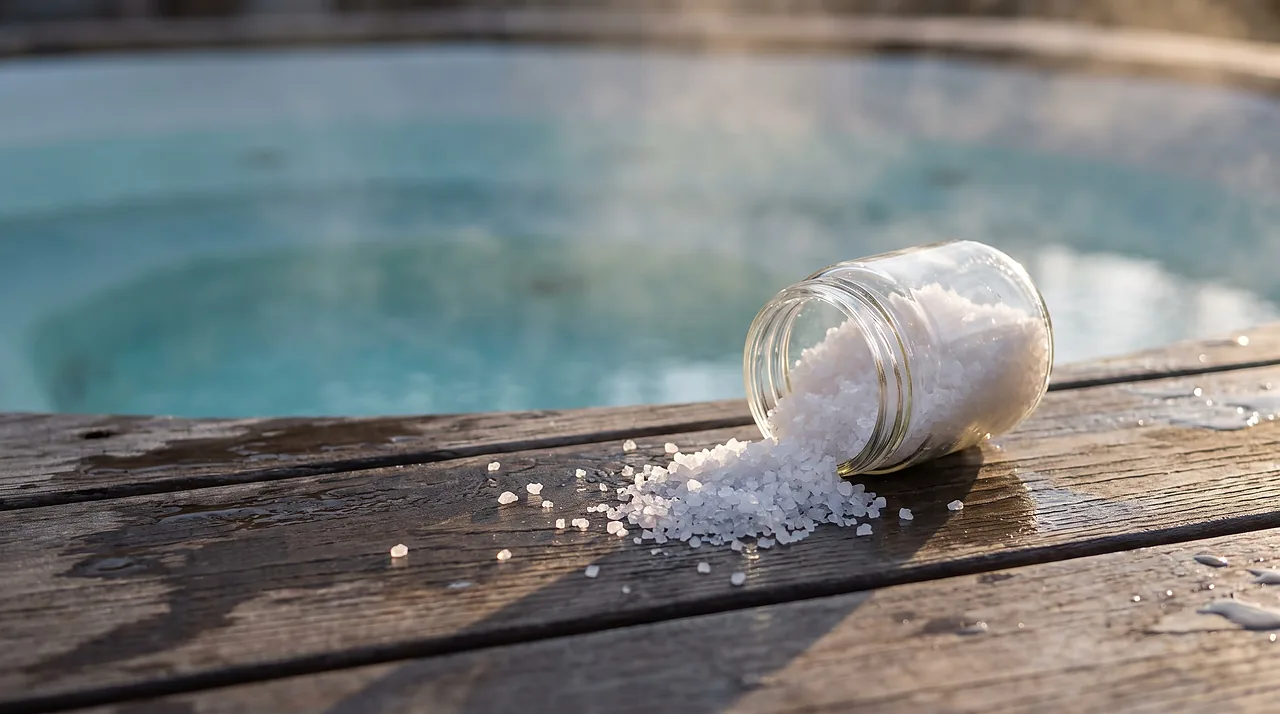
Epsom salt is the common name for magnesium sulfate, a mineral compound made of a magnesium cation and a sulfate anion, most often sold as the hydrated form epsomite (chemical shorthand MgSO4*7H2O). That's a fundamentally different molecule from sodium chloride, the plain table salt used in salt-water spa sanitizing systems, where a cell converts dissolved chloride into chlorine. Epsom salt has no chlorine-generating pathway at all. It just dissolves and sits in the water as magnesium and sulfate ions, indefinitely, since nothing in a standard spa consumes them.
That last part is the practical problem. Chlorine gets used up fighting bacteria and organics, so it needs regular topping off. Magnesium sulfate doesn't get "used up." Every scoop you add stays in the water until the next drain, stacking on top of whatever was already dissolved in the fill.
The three things it actually does to a hot tub

1. It drives up hardness and total dissolved solids
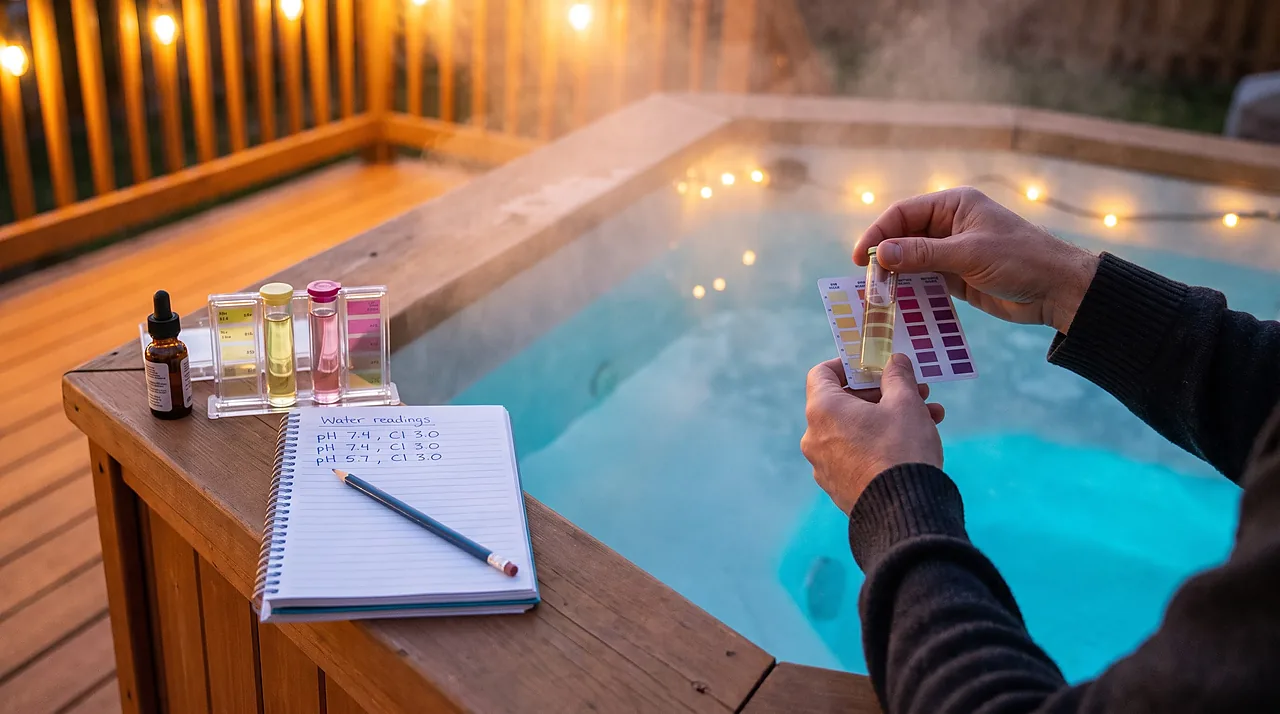
Spa water balance targets are built around calcium hardness, 150-250 ppm in common spa guidance, with a preferred pH of 7.4-7.6. A standard hardness test measures calcium specifically, and Epsom salt is magnesium, not calcium, so a test strip won't always show the full problem the way it would with a calcium-based additive. That's the trap: the water can be quietly overloaded with dissolved magnesium sulfate while the calcium hardness reading still looks fine, right up until scale and cloudiness show up anyway because the total mineral load in the water has climbed well past what the tub was filled to handle. The deeper mechanics of the calcium side of that balance, including what happens on either end of the range, are covered separately at hot tub calcium hardness.
2. It corrodes the metal parts your spa depends on

Sulfate is the corrosive half of the compound. Peer-reviewed corrosion research on steel exposed to sulfate-containing solutions found that sulfate ions depassivate steel, meaning they strip away the thin protective oxide layer metal normally relies on to resist rust and pitting, and that magnesium specifically was more effective at promoting that corrosion than some of the other common ions tested alongside it. A spa heater element, the metal fittings around jets, pump housings, and any exposed hardware are all candidates. None of that damage shows up the day you add the salt. It shows up as a slow pitting and thinning of metal over weeks and months of repeated soaks, exactly the kind of failure that ends with a heater element or a pump seal going out well ahead of schedule.
3. It throws off your existing water balance
Adding several ounces of any mineral salt changes total dissolved solids, and a sudden shift in TDS can make an otherwise correctly balanced pH and alkalinity behave unpredictably; water that tested fine an hour earlier can start scaling, clouding, or reading strangely on a test strip after a big dose of any foreign mineral. Rebalancing after that means retesting alkalinity, pH, and hardness from scratch rather than trusting yesterday's numbers, which is wasted chemical and wasted time for a soak that didn't need to start that way. The full sequence for getting all three back in order together is covered at hot tub water chemistry.
Will it actually void your warranty?
Spa owner's manuals routinely carve out an exception for chemical damage, and the language tends to run the same direction across brands: improper water chemistry, including non-approved additives, damages equipment and surfaces, and that repair is not something the warranty covers. In practice this means the tub itself doesn't stop being "under warranty" the moment Epsom salt hits the water, but a service claim tied to a corroded heater element or a degraded gasket can be denied once a technician traces the cause back to an additive that was never approved for spa use. Whether a specific manufacturer treats it as a flat exclusion or a case-by-case damage assessment varies, so the manual that came with the tub, not a general rule of thumb, is the one to check before assuming either way.
The exception: tubs built for it
A few spa makers sell tubs designed and specified for magnesium or Epsom salt water, with materials and settings chosen for it. If your manual or the maker explicitly approves Epsom salt, follow their dose and water-care steps. If the manual does not mention it, treat it as not approved.
So what's actually safe if you want that soak?

If the goal is a therapeutic, mineral-rich soak feel, two options exist that don't carry the same risk:
- Products formulated specifically for spas. These are dosed and buffered to be compatible with heated, circulated, filtered water and typically list compatibility with common sanitizer systems on the label. They still add dissolved solids, so treat them the same as any other additive: dose per label, then retest.
- Skip it and soak in properly balanced water. Correct pH, alkalinity, and sanitizer levels are what actually make a soak feel good on skin; a lot of the "silky" feeling people chase with bath additives is really just water that isn't over-chlorinated or under-buffered in the first place.
What doesn't belong in the mix, regardless of which route you pick: standard laundry or bath-aisle Epsom salt, scented bath bombs, bubble bath, or bar soap. None of those are formulated to survive a heater, a pump, and weeks of recirculation, and all of them add either minerals, oils, or foam-forming surfactants that a spa's filter and plumbing weren't built to process repeatedly. Scented drugstore Epsom bath salts are the worst version, since they add fragrance oils and dyes on top of the magnesium sulfate.
Epsom salt versus an actual salt-water spa: not the same category
The confusion this question keeps causing is worth settling directly with a side-by-side, since the two "salts" share a name and nothing else.
| Epsom salt (magnesium sulfate) | Salt-water spa system (sodium chloride) | |
|---|---|---|
| What it is | Magnesium and sulfate ions, a bath/wellness product | Plain sodium chloride, the same compound as table salt |
| Does it sanitize? | No sanitizing function whatsoever | Yes, a salt cell converts chloride into chlorine continuously |
| Typical concentration | A few ounces per soak, added by hand | Roughly 2,000-3,000 ppm salt, brand dependent, dosed once and topped off occasionally |
| Effect on hardness/TDS | Raises magnesium and total dissolved solids with no offsetting benefit | Raises TDS too, but it's the deliberate mechanism the whole system runs on |
| Equipment designed for it? | No; standard heaters and pumps are not built to handle repeated mineral dosing | Yes; the tub's cell, plumbing, and control logic are specified for that salt level |
| Warranty risk | Commonly excluded as a non-approved additive | Covered when installed and run per the manufacturer's own system |
If what you actually want is chlorine made from dissolved salt instead of dosed granules or liquid, that's a real, supported setup, and the full rundown on how it works, what it costs, and where it still needs manual attention lives at salt-water hot tub systems. Epsom salt is not a lighter or cheaper version of that system. It's an unrelated product that happens to share the word "salt."
If you already added some
One dose of a few ounces in a 300 to 500-gallon tub is not going to crack a heater element overnight. The realistic response is to test alkalinity, pH, and hardness within the next day, correct anything that drifted, and treat it as a one-time event rather than a habit. Repeated dosing, soak after soak, is what turns a mild mineral bump into the kind of sustained corrosive exposure the research above is describing. If it becomes routine and metal parts start showing early wear, an unusually short heater-element life, or fittings that pit and discolor faster than the tub's age would explain, that pattern is worth mentioning to whoever services the equipment, since chemical history is exactly what a tech checks first when diagnosing a failure that shouldn't have happened yet.