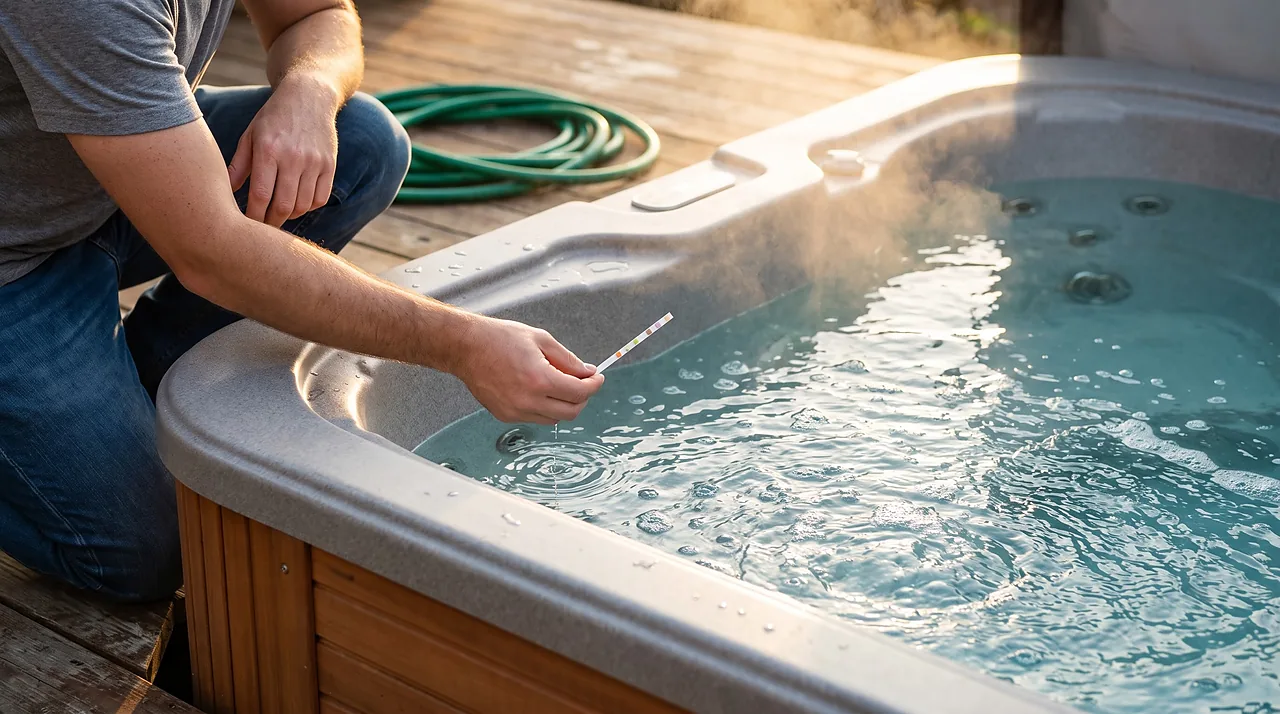
Three months in, the water still looks clear on a test strip, but the calendar says it is time to drain it anyway, and this is the first time doing it alone. That is a normal place to be. Draining and refilling a hot tub is not complicated, but it does have an order that matters: skip a step or do them out of sequence, and the result is a tripped breaker, a burned-out heater element, or a pump that will not prime once the water is back in. If the water level drops on its own between drains, that is a leak, not a drain question, see finding a hot tub leak. This walks through that order from the moment the decision is made to the moment the water is balanced again.
Decide whether this drain needs a purge first
Before touching a valve, think back over the last few months. Has the water ever gone cloudy for no clear chemistry reason, foamed heavier than usual, or smelled musty even when the test strip read fine? Any of those point to biofilm, a slimy layer that builds up inside jets, pipe walls, and filter housings where sanitizer never really reaches it. A drain alone does not clear that; the old water leaves, but the residue coating the plumbing stays behind and reseeds the next fill. A used or new-to-you tub gets this treatment automatically, since there is no way to know what the last owner's routine looked like. Run a dedicated line-flush purge through the plumbing before draining, following the full sequence at a hot tub biofilm purge, and let it circulate for the recommended time before moving to the next step.
If none of that has happened and the water has simply reached its scheduled interval, skip straight to draining. The math for how often that interval should be, based on actual gallons and bather load, lives in how often to change hot tub water. Today is about the mechanics of the drain itself.
Cut the power before anything else touches the tub

Turn the spa off at the GFCI breaker or the local disconnect. Do not rely on the topside control panel alone. A topside panel can leave the heater circuit live even when the display looks dark. The whole point of this step is to guarantee the heater cannot fire once the water level starts dropping. Spa heaters are built to shut themselves down on low flow, but that protection depends on a working pressure switch or flow sensor. A partially drained tub is exactly the condition those safety devices exist for. A heater element that runs dry, or with the water level below the heater housing, can see its sheath temperature climb from roughly 200 to as much as 1,500 degrees Fahrenheit in a minute or two, according to a spa heater troubleshooting reference in the pool and spa trade press. That is hot enough to split the sheath, burn through it, or destroy the element outright. That damage is not covered under warranty on most spas, and it is entirely avoidable by killing power before the first drop of water leaves the shell.
A 240V spa needs a GFCI disconnect within sight of the tub and at least 5 feet away (NEC 680). Know exactly where it is before starting, and confirm it is the right breaker if the panel is unlabeled. Flip it, then check the topside panel is dark and the jets do not respond. Wiring work belongs to a licensed electrician.
Getting the water out: gravity or a pump, and the real time math

Most tubs drain one of two ways: gravity, using the built-in drain spigot and a garden hose run downhill or into a low spot, or an assist, using a small submersible utility pump dropped into the shell with its own discharge hose. Most tubs have a drain spigot near the base, often behind a removable front skirt panel. It usually takes a garden hose, though valve operation varies, as some valves are pulled out and some twisted. Check the owner's manual if unsure. Both get the job done; the difference is almost entirely time and effort, and it is worth doing the arithmetic once so there is no guessing on drain day.
| Method | Typical flow rate | Time for a 340-gallon spa | What it needs |
|---|---|---|---|
| Built-in drain valve, gravity only | About 4 to 8 gallons per minute (slows as the level drops and the head pressure falls) | Roughly 45 to 85 minutes | A garden hose and a downhill or low-lying discharge point; no power tools involved |
| Submersible utility pump (about 1/6 to 1/3 hp) | About 25 to 40 gallons per minute | Roughly 9 to 14 minutes | A pump, a discharge hose, and a GFCI-protected outlet kept well away from the water |
| Wet-dry shop vacuum, finishing pass | Low, but reaches spots a hose or pump intake cannot | A few extra minutes at the very end | Used only to pull the last inch or two out of footwells and the pump volute, not for the bulk drain |
The formula behind that table is simple: gallons divided by gallons-per-minute equals minutes. A 340-gallon spa emptying at 6 gallons per minute takes about 57 minutes; the same tub at 30 gallons per minute with a pump running takes about 11. Bigger tubs and shared bather households often carry more gallons than that example, so run the same division against the actual capacity on the tub's spec plate; this number will not apply everywhere. Whichever method is used, once the bulk of the water is out, finish with the shop vac or a few towels to clear the low points, since standing water left in the footwell or around the pump housing gets in the way of the next step.
Where the water should go
Let sanitizer drop before draining, allowing a day or two without dosing as routine maintenance suggests. Directing runoff onto a lawn or gravel area away from sensitive landscape plants is usually fine. Storm drains, however, are frequently restricted because they flow straight into local waterways. Municipal rules govern discharge in each jurisdiction, so check local guidance before opening the drain.
For a tub with no accessible drain valve at all, or for a side-by-side look at exactly when a hose alone is enough versus when the extra pump earns its keep, that comparison is covered in more depth on its own at draining a hot tub with no drain plug and pump versus hose for a spa drain.
Wipe down the empty shell while everything is exposed
An empty shell is the only time the waterline scum, the corners behind the seats, and the underside of any grab bars are actually visible and reachable. A soft cloth or a non-abrasive spa-shell cleaner handles most of it; skip anything with ammonia, bleach, or an abrasive scrub pad, since those can dull an acrylic surface or leave a residue that reacts oddly with startup sanitizer. Rinse thoroughly before any water goes back in, because leftover cleaner residue is one of the more common causes of a fresh fill foaming within the first day. The full cleaning pass, including which products are safe on acrylic and which to avoid entirely, is laid out step by step in cleaning an empty hot tub.
Service the filter now, not after the tub is full again

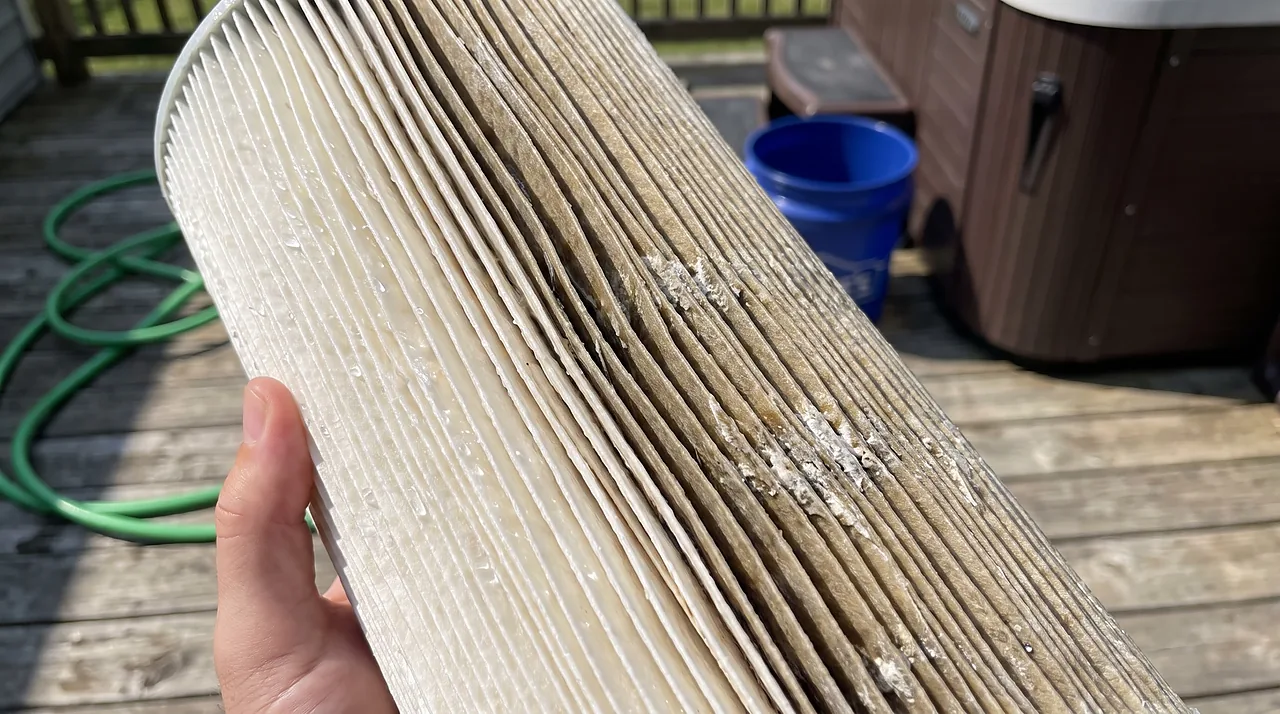
An empty shell is also the easiest time to pull the filter cartridge, since there is no water resistance and no risk of dropping it into a full tub. Rinse it thoroughly with a hose, working between the pleats where residue collects. If it has not had a chemical soak recently, this is the moment for one. Waiting a week, until the fresh water is already in, just lets the old filter quietly reseed it with whatever it was holding. The full rinse-versus-soak-versus-replace routine is covered at cleaning a hot tub filter, and if there is a second filter in rotation, swapping it in now instead of putting the same one back gives the just-cleaned one time to dry completely, which is covered at rotating hot tub filters. A filter going back in dirty, or the wrong one for the housing, is also a common hidden cause of weak or uneven jets once the tub is running again; if that has been a recurring complaint, cross-check it against weak hot tub jets before assuming the pump itself is the problem.
Refill through the filter well, not straight into the shell
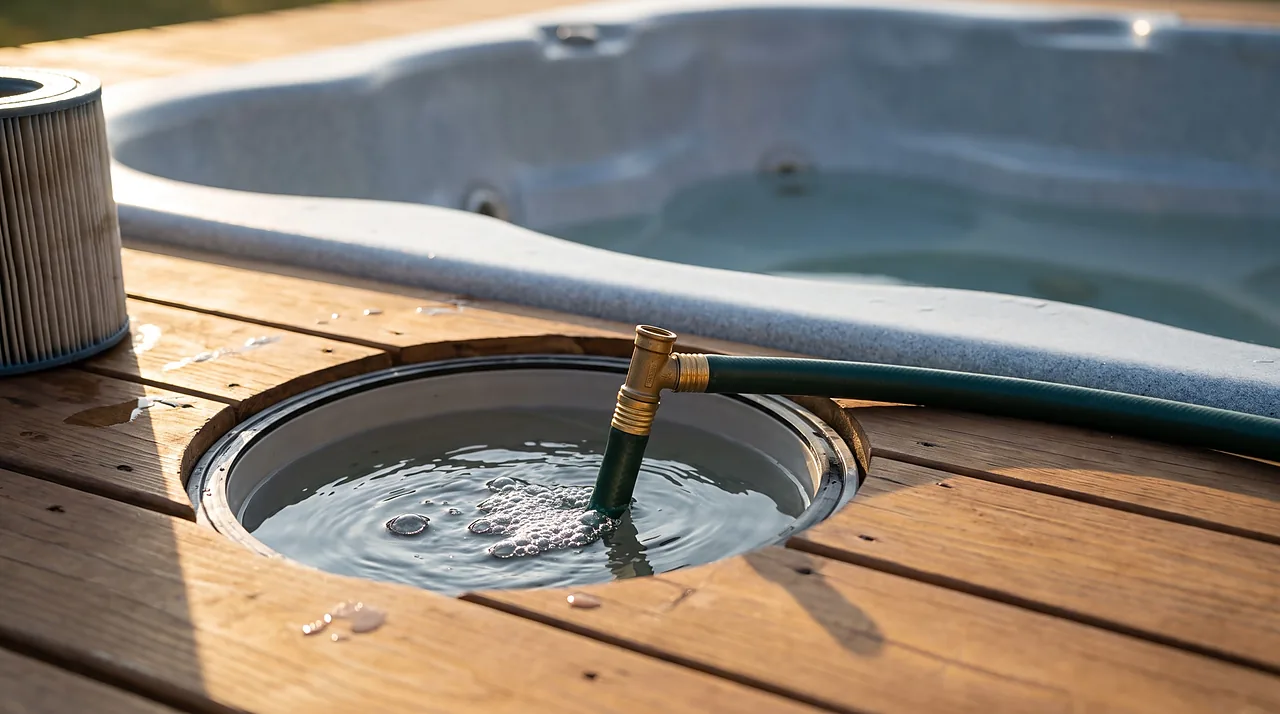
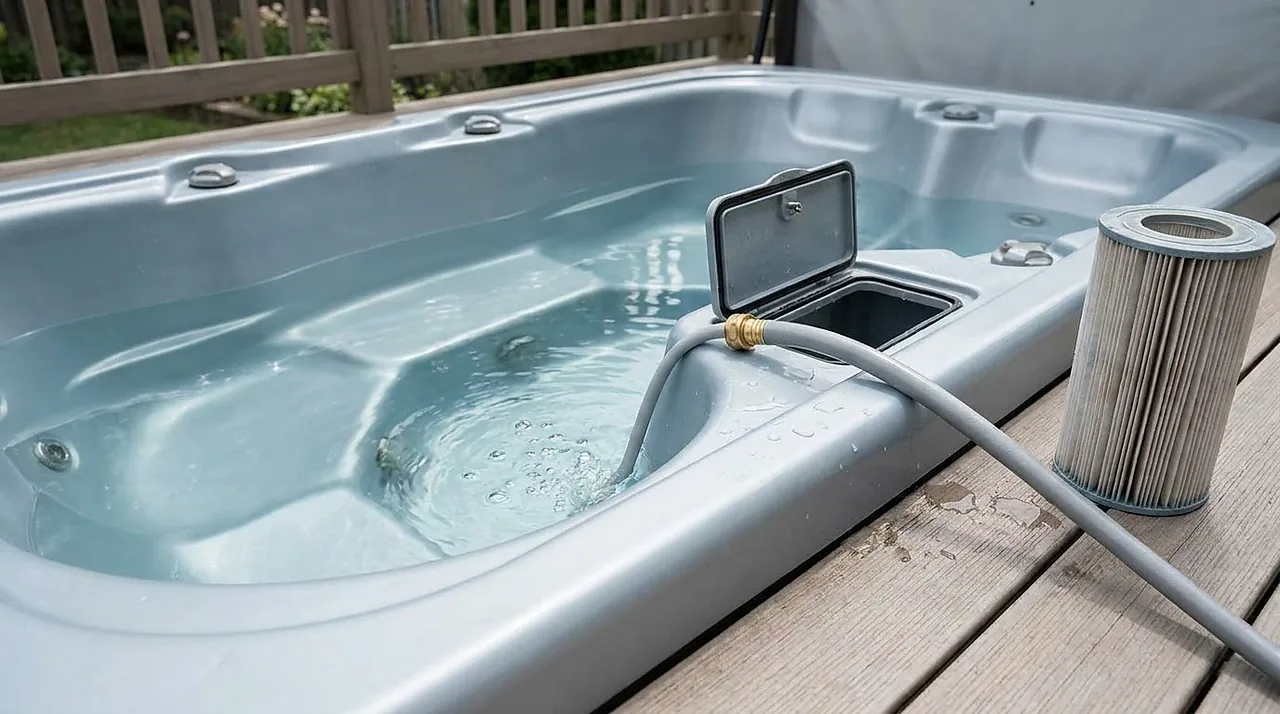
This is the step that prevents the single most common startup headache: an air lock in the pump that shows up as a flow fault or a pump that hums but will not push water once power is restored. Instead of running the hose over the edge and into open water, feed it directly into the filter compartment (the same well the cartridge sits in) with the filter itself removed and every jet turned fully open. Water entering there travels backward through the plumbing on its way to the shell, pushing trapped air out ahead of it instead of leaving pockets in the pump housing and pipe runs. Pool & Hot Tub Depot, an independent pool and spa retailer, describes the method plainly in its troubleshooting guide: "Stick the end of the hose into the filter well and leave all the jets open. This will fill the pump with water first, helping to remove air from the lines as the hot tub is filled."
Fill slowly, well below full hose pressure, and stop once the water sits about halfway up the filter well or just below the headrest jets, whichever the manual for the specific tub calls for. Reinstall the filter only after the fill is complete. The full step-by-step, including how to handle a tub with two filter wells or a separate circulation pump, is covered at filling a hot tub. Only once the shell is full and the filter is back in place is it safe to restore power at the breaker; doing it any earlier risks the same dry-fire damage covered above, since a partially filled heater housing is functionally the same as an empty one from the element's point of view.
Bring the water back to life: the startup chemistry order
Fresh fill water is not balanced water, even from a municipal tap, and it should not be treated like a topped-off tub. Test first, before adding anything. Total alkalinity gets corrected before pH, since alkalinity acts as the buffer that holds pH in place once it is set; the accepted range for pool and spa water generally runs 60 to 180 ppm, per the CDC's Model Aquatic Health Code, though most spa test kits and manufacturers work to a tighter practical target of roughly 80 to 120 ppm for a small, constantly heated body of water. Bring alkalinity into range first, let it sit through a full pump cycle, then check and correct pH into the 7.2-7.8 window, ideally 7.4-7.6. Calcium hardness comes next, particularly important if the fill water passed through a home softener, since soft water reads artificially low on hardness and will start pulling calcium out of the heater element and shell fittings if left uncorrected.
Sanitizer goes in last, after the other three numbers are settled. That order keeps the fresh dose from being thrown off immediately by a pH or alkalinity swing. A starter dose of dichlor is the common first step. It dissolves cleanly and sanitizes fast. But dichlor carries cyanuric acid along with it, and that acid has nowhere to go except out with the next drain. Owners running dichlor on every fill are worth pointing toward the deeper explanation of how that stabilizer accumulates and what a workable long-term approach looks like at managing cyanuric acid in a hot tub. The full order of operations, quantities, and which products are genuinely different from each other rather than the same compound in different packaging, is covered at the chemicals a hot tub actually needs.
Run the jets and let everything circulate for a full cycle, usually a few hours, before testing again and making any second-round adjustments. A brand-new fill rarely lands perfectly on the first dose. That is normal.
When the whole cycle repeats
None of this changes based on how the last drain went. The sequence repeats every time the interval comes back around: purge check, power off, water out, shell and filter serviced, refill through the well, chemistry rebuilt in order. The interval itself is the only variable, and it scales with gallons and bather load. That math is walked through at how often to change hot tub water.