The shell is empty, the hose is hooked up, and the obvious move is to hang it over the edge and let it run. That is the wrong move. Water poured straight into an open tub fills the shell fine, but it leaves the pump housing and the plumbing runs full of trapped air, and that air is exactly what causes a flow fault, a humming pump that will not push water, or a heater that gets damaged the first time it tries to fire. The hose needs to go somewhere specific first: into the filter well, or into a bottom jet fitting on a tub without an accessible well, so the water pushes that air out ahead of it instead of leaving it stuck in the lines.
Where the water actually goes in

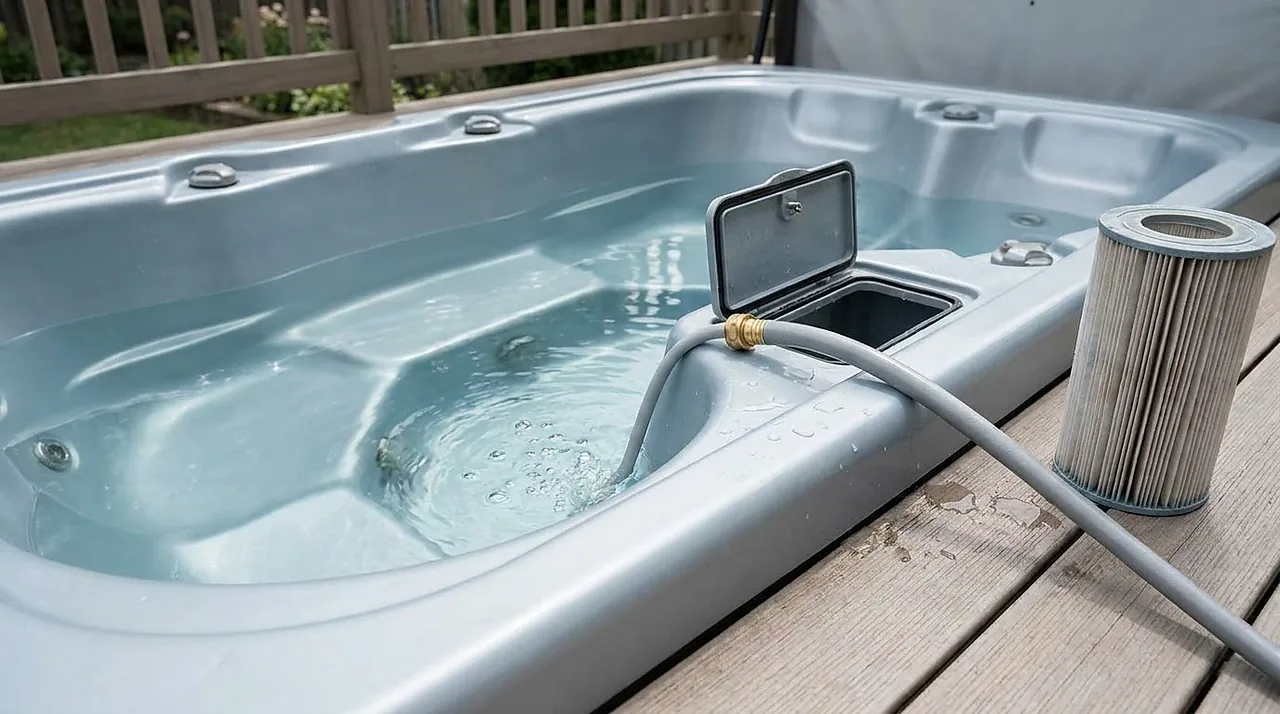
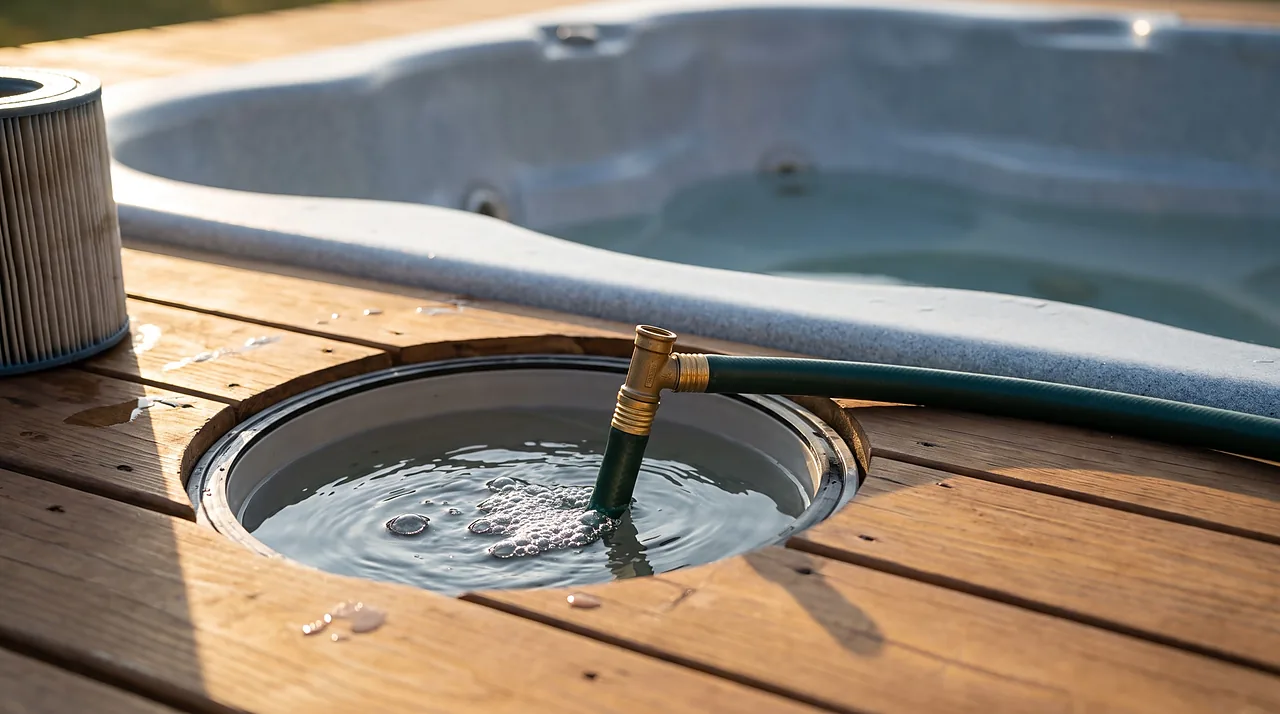
Pull the filter cartridge out and set it aside, then feed the garden hose straight down into the now-empty filter well, the same cylindrical compartment the cartridge normally sits inside. Open every jet in the tub all the way and leave any diverter valves in a neutral, fully-open position before starting. Turn the water on at a moderate rate rather than full blast; a slow, steady fill gives trapped air time to work its way out through the open jets instead of getting pushed into a pocket somewhere in the plumbing. A hose-end pre-filter screwed onto the hose catches sediment and some metals on the way in, worth using on well water or in areas with stained fill water. It slows the fill a little.
Water entering through the filter well travels backward through the suction line and the pump body first, filling those internal passages before it ever reaches the open shell. That is the entire point. Clearwater Spas puts it plainly in its installation manual: filling the spa through the filter housing "will help to prevent air locks (trapped air) in pumps on start up," and doing it this way "ensures that air bubbles are removed from the lines while you fill the spa." Watch the filter well itself while the water rises. A few bubbles breaking the surface early on is normal; the flow settling into a smooth, bubble-free rise means the plumbing behind it has filled and cleared.
Not every tub has a filter well big enough to drop a full-size hose into, and some portable or inflatable models have their filter housed somewhere that will not accept one at all. On those, the workaround is a bottom jet fitting instead: unscrew a jet face near the bottom of the shell, feed the hose into that opening for the first few minutes of the fill, then pull it back out and finish filling the open shell normally once the plumbing below has clearly filled. The goal is identical either way, water into the low, hidden plumbing first, air out through the open jets, before the bulk of the fill happens through open water.
Never restore power until water covers the highest jet

This is the single most expensive mistake to get wrong on fill day. A spa heater is built to run submerged, with water constantly moving past the element to carry heat away from it. Turn the power on before the water level is high enough to cover the heater and the highest jet in the shell, and the element can fire into air, or into a trickle of water too thin to cool it. Balboa's own control documentation is direct about what that does: without enough flow through the heater "to carry the heat away from the heating element," the system is designed to shut the heater down rather than let it keep running, and its troubleshooting guidance for a flow fault starts with checking "low water level, suction flow restrictions, closed valves, trapped air, too many closed jets and pump prime." That protection exists because the alternative is bad. A heater sheath running dry can see its surface temperature climb from around 200 degrees to as high as 1,500 degrees Fahrenheit in a minute or two, according to a pool and spa trade heater-troubleshooting reference, hot enough to split the sheath, burn through it, or destroy the element outright.
The safe rule is simple and does not need a tape measure: fill until the water is well above the topmost jet body in the shell, deep enough that no jet, headrest fitting, or the heater housing itself is exposed to air, then reinstall the filter cartridge, and only then flip the breaker or local disconnect back on. Filling a few extra inches past that point costs nothing. Restoring power before it does not save more than a few minutes and risks a part that usually is not cheap to replace. The normal running level is the fill line marked on the shell, usually around the middle of the skimmer opening. Fill to that line, since too low lets the skimmer suck air and too high stops the skimmer from skimming.
How long it actually takes: turn gallons and hose flow into minutes

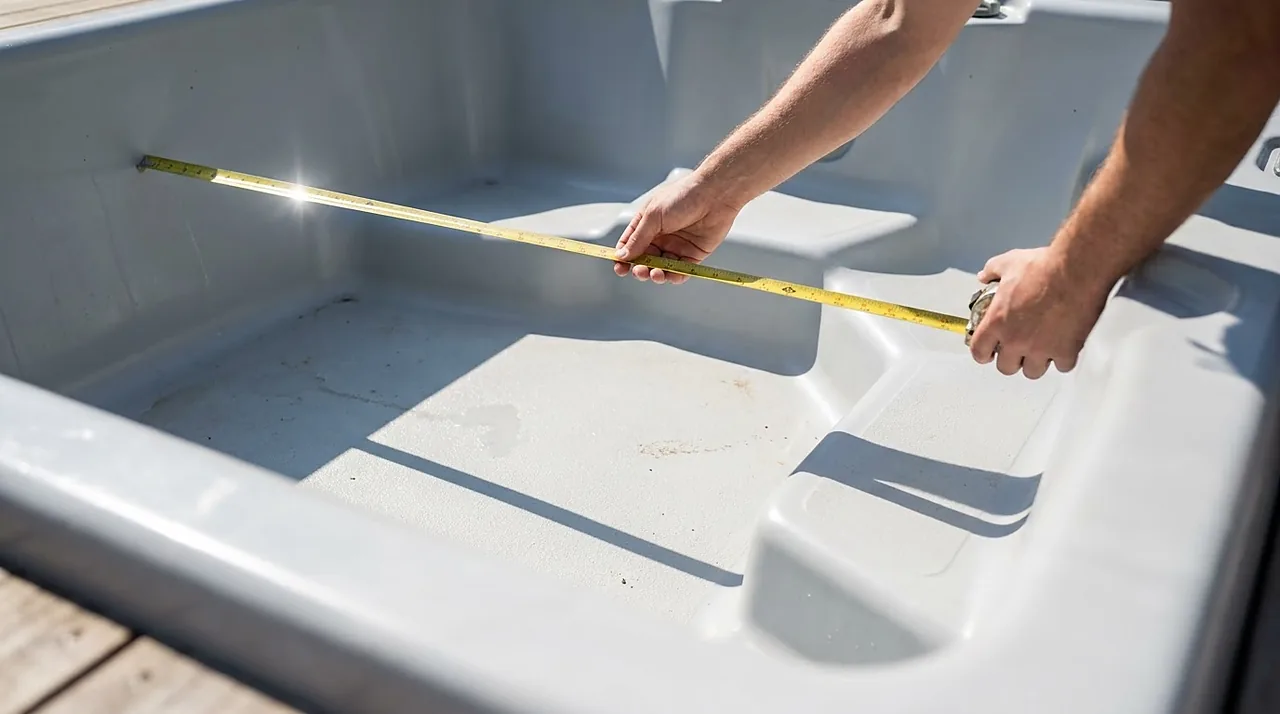
Fill time is just two numbers divided into each other: the tub's capacity in gallons, divided by the hose's real flow rate in gallons per minute. The gallon figure sits on the spa's spec plate or in its owner's manual (the full method for finding it, including what to do when that plate is long gone, is covered at figuring out how many gallons a hot tub actually holds). The flow-rate side is where most people guess wrong, because a garden hose's real output depends on its diameter, its length, and the actual dynamic pressure at the spigot, which runs lower than a home's static pressure once friction losses in the pipe are accounted for. Washington State University's extension irrigation program, which publishes a hose-flow calculator built on those variables, is upfront that a chart estimate is less reliable than just timing it: measuring flow "using a known volume and a stop watch" beats any calculator, in their own words.
That measurement takes about a minute. Run the hose into a 5-gallon bucket and time how long it takes to fill, then divide 5 by that time in minutes. A bucket that fills in 30 seconds (0.5 minutes) works out to 10 gallons per minute; one that takes a full minute is 5 gallons per minute. Once that number is known, the rest is arithmetic. Here is how that plays out across a few common flow rates and spa sizes:
| Measured hose flow | 300-gallon spa | 425-gallon spa | 550-gallon spa |
|---|---|---|---|
| 4 GPM (older hose, long run, or low house pressure) | About 75 minutes (1h 15m) | About 106 minutes (1h 46m) | About 138 minutes (2h 18m) |
| 9 GPM (typical 5/8-inch hose, short run, normal pressure) | About 33 minutes | About 47 minutes | About 61 minutes |
| 15 GPM (3/4-inch hose, short run, higher pressure) | About 20 minutes | About 28 minutes | About 37 minutes |
Two hoses run at once, from separate spigots, roughly cut any of those times in half, assuming the house's plumbing can supply both without the pressure sagging noticeably. A tub with two accessible filter wells can take a hose in each and fill both sides at once for the same effect. Whatever the number comes out to, plan for it; walking away from a filling tub for two hours unsupervised risks an overflow the moment the water passes the skimmer line.
If the pump hums or a flow fault shows up right after filling
A brief priming message on the topside display in the first few minutes after a fill is normal and usually clears on its own once the pump has had a chance to purge the last of the trapped air. If it does not clear, or the pump is audibly running but no water is moving through the jets, that is very likely a small air pocket still caught somewhere in the plumbing, most often right at the pump body. The fix is to loosen a union fitting near the pump slightly until air hisses out and water starts to seep through, then retighten it and try again. The full walkthrough for getting a pump to prime cleanly, including what to check before touching any fitting, is at priming a hot tub pump that will not catch, and if the display is throwing an actual flow-related fault code rather than a generic priming message, the code-by-code breakdown lives at reading and clearing a hot tub FLO error.
Once the tub is full
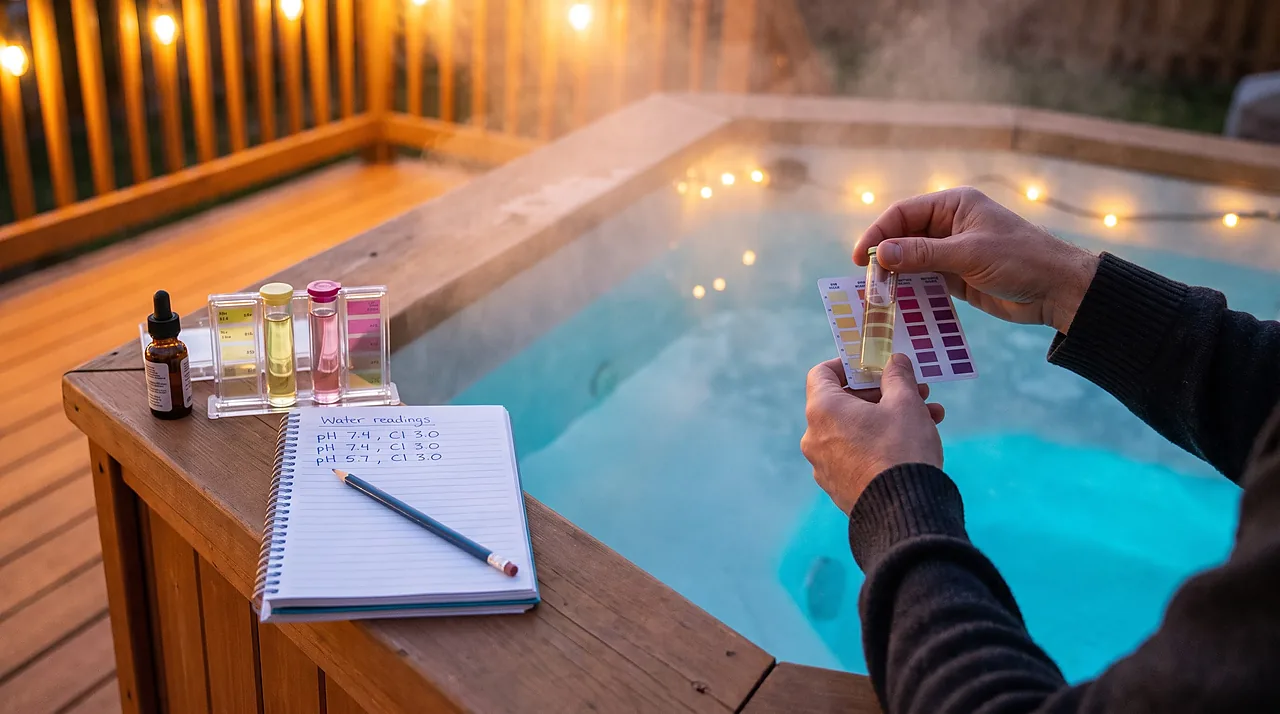
A full, air-free tub with power restored is only the halfway point. Fresh fill water, even straight from a municipal tap, is not balanced water, and it should not go straight to a sanitizer dose without testing first. The order that actually works, alkalinity before pH before hardness before sanitizer, and why that order matters for a small, constantly heated body of water, is covered at hot tub water chemistry basics. And if this fill is happening as part of a full scheduled drain rather than a first-time setup, the complete day-of sequence, purge check, power-down, drain timing, and filter service before this step ever starts, is laid out at draining and refilling a hot tub the right way.