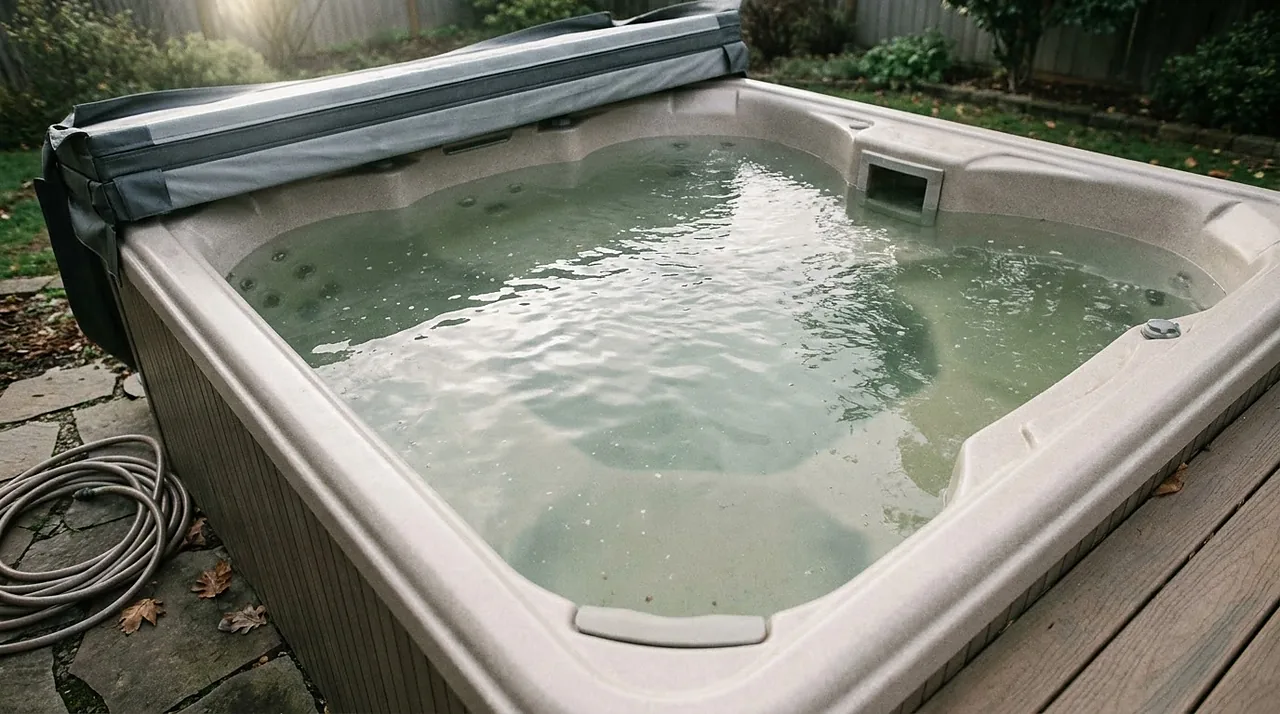
Green water almost always means one of two very different problems, and treating the wrong one makes things worse. If the water is green but you can still see straight to the bottom, you're most likely looking at dissolved metal, usually copper. If the water is green and hazy or cloudy, you're looking at algae, a dead sanitizer, or both. The fixes run close to opposite. Start with a thirty-second test before you reach for any bottle.
This mix-up shows up constantly in owner forums, where someone describes water that's "green, cloudy and smelly" and a dealer counter-person hands them a generic algaecide or a jug of shock without ever asking whether the water is clear or cloudy underneath the color. That guess wastes money at best. At worst, dumping chlorine into copper-stained water can oxidize the metal and bake it permanently into the acrylic shell or the tub's plumbing as a stubborn green-black stain.
Start with the clarity test, not a chemical

Fill a clean drinking glass from the spa water, or shine a flashlight straight down through the water at the deepest point of the shell. Ask one question: is the tint see-through, or does it look like fog?
- Clear and green (or blue-green): you can read a coin at the bottom of the glass, or see the tub floor plainly through 30+ inches of water. This points to dissolved metal.
- Hazy, cloudy, or green with visible particles: the water scatters light, the bottom looks blurry, or you can feel a slick film on the shell walls. This points to algae, dead sanitizer, or organic buildup.
- Green streaks or a green-black scum line at the waterline only: this is often localized biofilm or metal plating out at the corrosion point, worth checking separately (see the biofilm and scum-line notes below).
Skip this step and every downstream decision, sequestrant or shock, alkalinity or acid, is a coin flip.
Can you soak in green water?
Do not soak in cloudy green water, since it means the sanitizer has failed. Clear green water from metal is not a sanitizer failure, but it can tint light hair, swimsuits, and the shell, so fix it first. Either way, test free chlorine or bromine before anyone gets in.
Green and clear: usually copper or another dissolved metal

Copper is the most common culprit behind green-but-clear spa water. It gets in three ways: it's already in the fill water (common with private wells and older copper piping), it leaches out of an aging heater element or copper heat exchanger as the metal corrodes, or it was introduced by a copper-based algaecide added at some point in the tub's history. The EPA sets a secondary (aesthetic) standard for copper in drinking water at 1.0 mg/L specifically because of the blue-green staining and metallic taste it causes at that concentration, with a stricter 1.3 mg/L health-based action level under the Lead and Copper Rule. Spa water that draws from a well with elevated copper, or that's been heated for years through a corroding element, can carry enough dissolved copper to tint the whole tub without a speck of cloudiness.
Low pH accelerates this. Acidic water is more corrosive to metal fittings and heater elements, so a tub that's been running with pH consistently under 7.2 is more likely to be pulling copper out of its own plumbing. That's one more reason the balance basics matter beyond comfort: a stable pH in the 7.2 to 7.8 range and matching total alkalinity protect the hardware as much as the swimmer's eyes.
Signs that point toward metal over biology: the water stayed green through a full shock and filter-clean cycle with no improvement, there's a greenish stain forming on the shell at or below the waterline, hair or a white washcloth left in the water for an hour comes out with a faint green or copper tint, or you're on well water and have never run a metal sequestrant.
Green and cloudy: usually algae or a sanitizer that hit zero
True algae in a hot tub is less common than in an outdoor pool because the heat, small volume, and closed cover limit sunlight and airborne spores, but it's not rare, especially in a tub that sat uncovered, unheated, or unsanitized for more than a few days. Algae needs light, nutrients, and an open door, meaning free chlorine or bromine at or near zero. Once it takes hold it clouds the water because it's a living organism suspended in it.
More often than actual algae, cloudy-green water in a hot tub is dead sanitizer plus organic load: body oils, lotion, and dead skin cells feeding whatever tiny amount of biology is already present, combined with a tub that hasn't been shocked or had its filter cleaned in weeks. Either way, the underlying number to check is free chlorine or bromine, not total. A strong sanitizer smell at the tub almost always signals too little free sanitizer rather than too much; the smell comes from combined chlorine (chloramines) built up from bather waste, and it means the free sanitizer has been running low for a while.
Cloudy-green water often travels with a couple of other complaints at once: a musty or swampy smell, a slick or slippery feel on the shell walls (a biofilm signal), or foam that won't settle. If any of those show up alongside the green, the standing biofilm inside the plumbing is worth a dedicated line-flush before you even touch the visible water, since shocking around a dirty pipe network just gives the crud somewhere new to redeposit from.
A side-by-side to settle the guess
Green tint, water stays clear, coin visible at the bottom
Most likely cause: Dissolved copper or another metal. Fix first: Test for metals if you can, add a metal sequestrant, run and clean the filter, address the source (well pretreatment or an aging heater element). Do not do: Shock heavily before sequestering; oxidizing dissolved copper can plate it out as a stain.
Green and hazy or foggy, particles visible in a flashlight beam
Most likely cause: Algae growth or a long stretch with no measurable sanitizer. Fix first: Superchlorinate per label directions, run the pump continuously until clear, clean or replace the filter. Do not do: Add a metal sequestrant and stop there; it does nothing for biology.
Green-black ring right at the waterline, water otherwise fairly clear
Most likely cause: Localized metal staining or a scum line confined to the surface. Fix first: Scrub with a spa-safe surface cleaner, correct pH and metals in the water. Do not do: Assume it needs a full drain before you've even tried a wipe-down.
Green, cloudy, and slimy to the touch on the shell
Most likely cause: Biofilm plus low sanitizer. Fix first: Run a line-flush/purge product before shocking, then rebalance and shock. Do not do: Shock repeatedly without purging; the biofilm keeps reseeding the water.
Fixing copper-green water without staining the tub
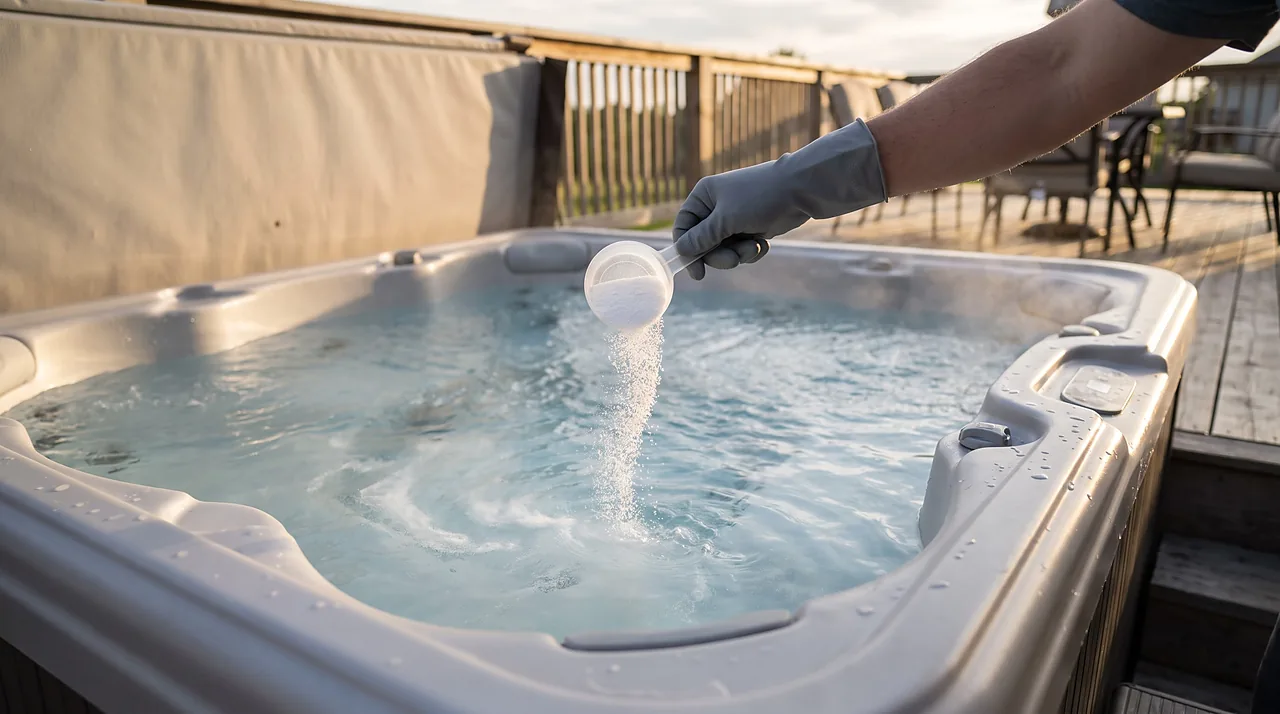
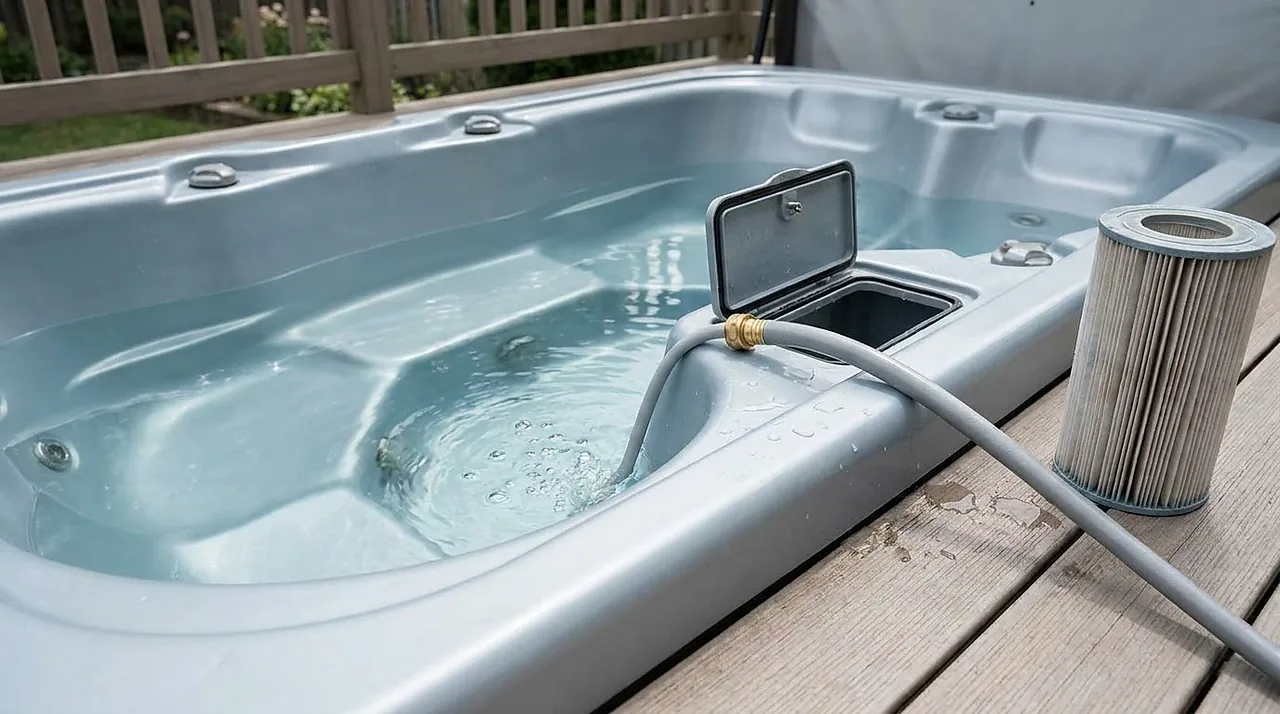
The order matters here. First, bring total alkalinity into the 80 to 120 ppm working range alongside pH. Alkalinity is the buffer that holds pH steady. Correct pH alone and it tends to drift back down within days, undoing the fix. Second, correct pH into the 7.2 to 7.8 range; very low pH keeps pulling more metal into solution and works against every step after it. Third, dose a metal sequestrant or metal-out product built for spas at the label rate for your gallon count. This binds the dissolved copper into a form the filter can trap, instead of letting it float free or oxidize into a stain. Fourth, run the pump and let the filter work through a full cycle before judging the result, then rinse or replace the filter, since it's now holding the metal you just pulled out of suspension. Only after the sequestrant has had time to work should you shock the water, if the sanitizer level also needs a boost. Shocking metal-laden water before it's sequestered is the single most common way owners turn a green tint into a permanent green-black shell stain.
If the source is a private well, a whole-house pretreatment step (a simple pH-correcting or oxidizing filter ahead of the fill line) solves the problem at the tap instead of fighting it every time the tub gets refilled. If the source is an aging copper heater element, persistent green tint after a proper sequestrant treatment is a sign the element itself is corroding and due for inspection.
Fixing algae-and-neglect green water

This side of the problem responds to the same basic steps as any severely cloudy tub with the sanitizer at zero: a strong shock dose per the product label, continuous circulation for several hours to a day, and a filter that's clean enough to actually catch what the shock kills. If the water has been green and cloudy for more than a day or two, or it doesn't respond to one shock treatment, a full drain and refill is usually faster and cheaper than fighting it forward, especially in a tub under roughly 400 gallons where a full drain takes well under an hour. As a working rule of thumb, divide the tub's gallons by 3, then by the number of people using it regularly, to estimate how many days a fill should last before a routine drain; a tub that turned green well ahead of that schedule points to a sanitizer or cover problem, not bad luck.
Once the water is clear, staying ahead of it is mostly routine maintenance: keep free chlorine or bromine in range with regular testing, don't lean on shock as a substitute for daily sanitizer, and keep the cover on and reasonably sealed when the tub isn't in use, since sunlight and open air both feed the biology that turns cloudy water green in the first place.
Brown or yellow instead of green
Water that turns brown or rust-colored right after a shock usually has iron or manganese from the fill water, which the shock oxidizes into color. A faint yellow tint can be pollen, iron, or a high bromine reading. The fix follows the metal route above: balance pH and alkalinity, add a spa metal sequestrant, run and then clean the filter, and pre-filter the fill water next time. If the tub changed color right after treatment, see the full guide to cloudy or discolored water after a shock.
Why the wrong guess costs more than the right one
Treating algae-green water with only a metal sequestrant leaves the actual problem, the live organism and the dead sanitizer, completely untouched, so the water stays cloudy while the owner has spent money on the wrong bottle. Treating copper-green water with heavy shock before sequestering can push dissolved metal out of solution and onto the shell, turning a fixable tint into a stain that needs an acid wash or, in bad cases, a new shell liner. A five-minute flashlight-and-glass check, plus a metals test strip where you can get one, costs nothing and prevents both mistakes.