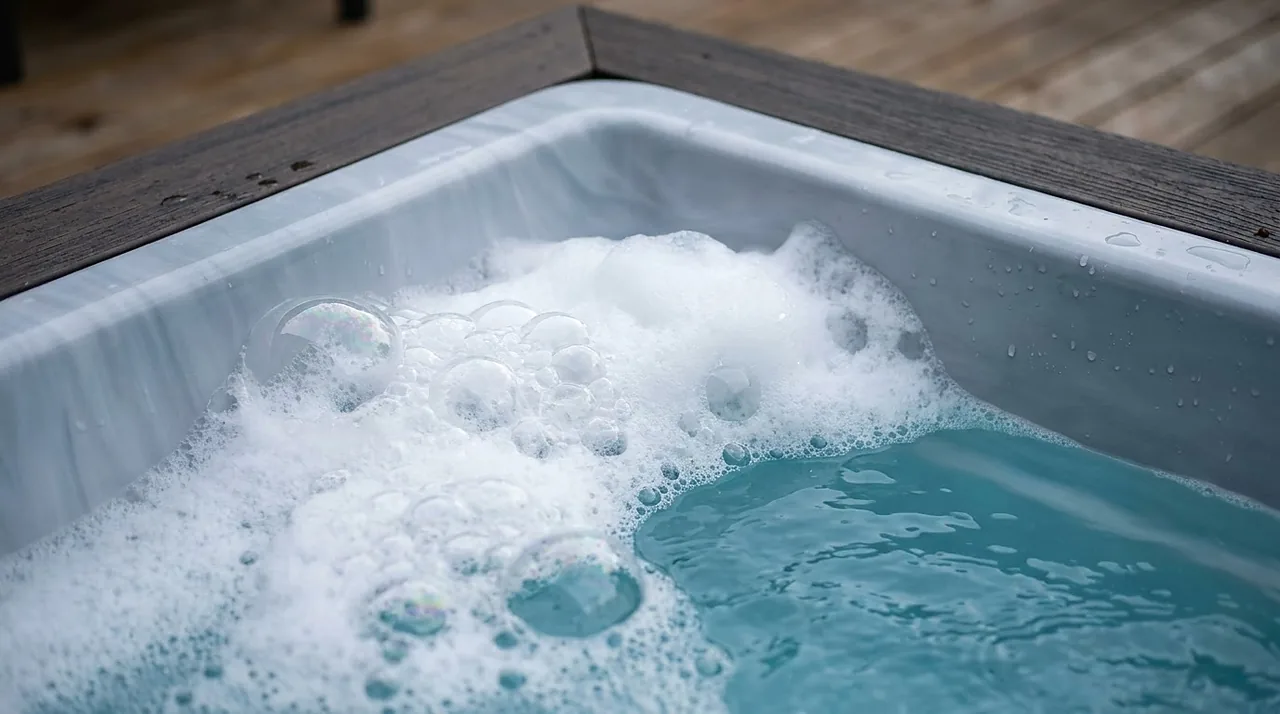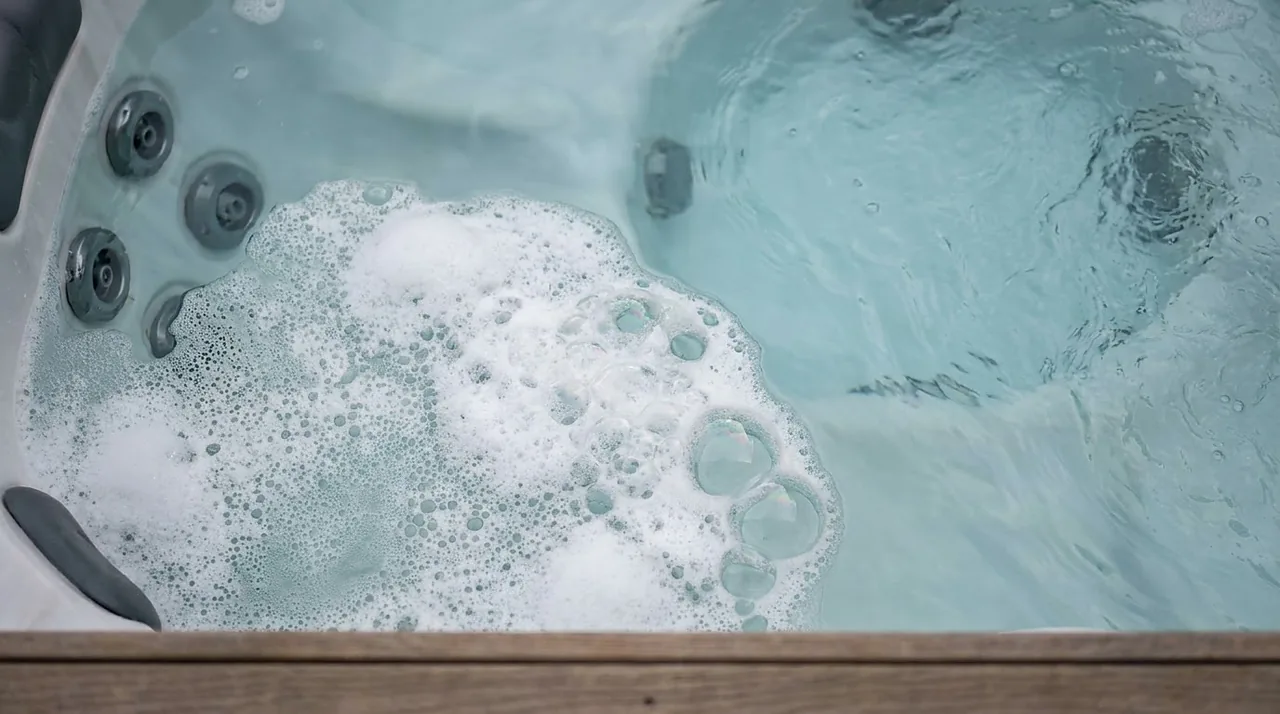
You cleaned the water two days ago and there it is again: a raft of small, greasy-looking bubbles piling up along one side of the tub, thickest right where the jets churn hardest. Foam like this almost always comes down to a surfactant problem, something people bring into the water that lowers its surface tension. Your chlorine or bromine feed usually has little to do with it.
A surfactant is any substance that lowers the surface tension of water, which is exactly what makes bubbles able to form and hold their shape instead of popping. Detergent residue rinsed out of a washing machine but not out of a swimsuit is the single biggest source. Body lotion, sunscreen, hair conditioner, and shaving products are close behind. Cheap, filler-heavy chemicals can add their own surfactant load, and if none of that fits, the foam may be biofilm sloughing off the inside of the plumbing every time the pump kicks on.
How much foam is normal?
A thin layer of bubbles that pops within seconds after the jets stop is normal aeration. Foam that lingers, piles up along one side, or looks greasy is the surfactant problem this page is about.
What's actually floating on top of your water

Picture the jets as a blender: they whip air into the water constantly. Air alone doesn't make foam. Water alone doesn't make foam. It takes both of those plus a surfactant molecule sitting at the surface, hooking onto the air bubble and keeping it from collapsing. Pull any one of the three away and the foam has nothing to hold onto.
That's why foam shows up worse right after the jets turn on and settles down once the pump cycles off. It's also why a defoamer product works at all: most of them are silicone- or mineral-oil-based, and they don't destroy the surfactant, they just interfere with the bubble's surface so it can't hold its shape. The foam disappears from view. The surfactant that caused it is still dissolved in the water, waiting for the next jet cycle.
The four sources that actually cause it

Picture a household of four rotating through the same tub three or four evenings a week. Over a couple of weeks, here's roughly what's landing in that water and where it's coming from.
- Detergent-soaked swimwear. A suit washed in regular laundry detergent and rinsed under a sink faucet still holds enough surfactant to foam a 300-gallon tub for a soak or two. Rinsing in plain water, or better, hand-washing suits in a mild, detergent-free soap made for swimwear, removes most of it.
- Body products. Lotion, sunscreen, hairspray, and heavy conditioner are surfactants and oils by design; that's what makes them spread and foam in the shower too. A quick rinse-off shower before getting in cuts this load more than any chemical fix.
- Bargain or off-brand chemicals. Some budget shock and sanitizer products use cheaper fillers and dispersants that behave like surfactants once dissolved. Reading the label for "inert ingredients" won't tell you much; switching to a name-brand dichlor, chlorine, or bromine product and watching whether the foam eases over the following week is the practical test.
- Biofilm in the plumbing. Slime living inside the pipes, unions, and heater sheds surfactant-like residue continuously, which is why foam from biofilm doesn't clear up no matter how carefully everyone showers first. A clean filter and a fresh test kit reading won't touch this one; it takes an actual plumbing purge, covered step by step in the biofilm purge guide.
A quick way to sort out which one you've got
Match what you're seeing against the table below. It won't nail the cause every time, but it narrows four possibilities down to one or two fast.
Foam started right after doing laundry or a new suit's first swim
Most likely source: Detergent residue on swimwear. What to try first: Rinse suits in plain water only, or hand-wash without detergent, for one week.
Foam worse after a soak with lotion, sunscreen, or styled hair in the water
Most likely source: Body products. What to try first: Rinse-off shower before every soak for a week; skip lotion the day of.
Foam appeared after switching to a new or discount chemical brand
Most likely source: Filler-heavy chemical product. What to try first: Finish the current container, then switch brands and watch the next fill cycle.
Foam persists after a full drain and refill with fresh water
Most likely source: Biofilm in the plumbing. What to try first: Run a dedicated pipe purge before refilling again.
Foam plus a musty or sulfur smell plus cloudy water, all at once
Most likely source: Biofilm, advanced. What to try first: Skip troubleshooting steps and go straight to a purge.
Does the balance of the water matter at all
Some, though on its own it rarely closes the case. Water with total alkalinity or pH badly out of range foams more easily because unbalanced water holds surfactants and oils at the surface less predictably. Keep pH 7.2-7.8 (ideally 7.4-7.6) and total alkalinity 80-120 ppm. Getting alkalinity right first, then pH, keeps the water from swinging and gives whatever surfactant fix you're trying a fair shot at working. The full method for testing and adjusting both lives in the water-testing guide, and low or falling total dissolved solids after a fresh fill also plays a role covered in the TDS article.
Skip the temptation to blame calcium hardness on its own. Balance supports whatever fix you're trying; it rarely explains the foam by itself, so don't spend a week chasing a hardness number while the actual surfactant source, a lotion habit or a detergent-soaked suit, keeps refilling the water every soak.
What defoamer is actually for

Use it the way you'd use a fire extinguisher on a small grease fire: it puts the visible problem out fast so you can host the barbecue or take the soak you planned, and then you go find out why the fire started. A capful of defoamer, dosed per the label for your gallon count, will usually knock a foam layer down within 10 to 20 minutes. It does nothing to remove the surfactant from solution, so if nobody changes what's going into the water, the foam is back within a day or two, often worse, because defoamer itself can add a small surfactant load of its own if overused.
Defoamer earns its keep as an occasional stopgap for a specific event, not a weekly habit. If you're reaching for it more than once every couple of weeks, that's the signal to work through the source table above instead of restocking.
When foam is telling you something bigger is wrong
Foam by itself, with clear water and no odor, is a habits problem: swimwear, lotion, or a chemical brand. Foam alongside a chlorine smell is often misread the other way around. A strong sanitizer smell and stinging eyes mean chloramines, the combined chlorine that forms when sanitizer reacts with body oils and sweat, and the fix is to add more free chlorine through a shock dose until the combined chlorine breaks apart. The CDC Model Aquatic Health Code sets the action threshold at 0.4 ppm combined chlorine for public facilities, while home owners commonly shock when combined chlorine goes above 0.5 ppm. Above that, the standard response is superchlorination to break the chloramines apart, which is exactly what shocking the water does.
Where things turn serious is when foam, a persistent smell, and cloudy water all show up together. That combination almost always means biofilm has taken hold somewhere the filter and test kit can't reach, inside the plumbing itself, and no amount of skimming, shocking, or defoamer touches it. At that point, stop chasing the surface and go straight to a full biofilm purge before doing anything else. Cloudy water without foam or smell is its own, simpler puzzle, walked through in the cloudy-water guide.
Fizzy water is a different problem
Lots of tiny bubbles all through the water without a foam layer usually means air is getting into the system. Common culprits include a low water level letting the skimmer suck air, a loose pump union or filter lid, or fresh fill water releasing dissolved air for a day or two. The fine bubbles from an ozone injector or an air blower are completely normal. If fizz appears alongside weak jets, check the water level and inspect the pump unions first.
Keeping it from coming back
A short list of habits does more long-term work than any product:
- Rinse swimsuits in plain water after every wash, or hand-wash them without detergent.
- Take a 30-second rinse-off shower before soaking, especially after applying lotion or sunscreen.
- Stick with one chemical brand long enough to know how your tub responds to it, and stock what's actually recommended rather than the cheapest jug on the shelf, a distinction the guide to which chemicals you genuinely need lays out.
- Keep alkalinity and pH inside the PHTA ranges so the water isn't fighting you on top of everything else.
Is foam itself something to worry about
Mostly, foam is a cosmetic nuisance you can trace back to a habit or a chemical brand and fix within a soak or two. Heavy foam can still make it harder to see the bottom of the tub or a submerged step, which is worth paying attention to on its own. If you're wondering whether foamy water is safe to sit in versus just annoying to look at, that question gets its own answer in the foam safety article.