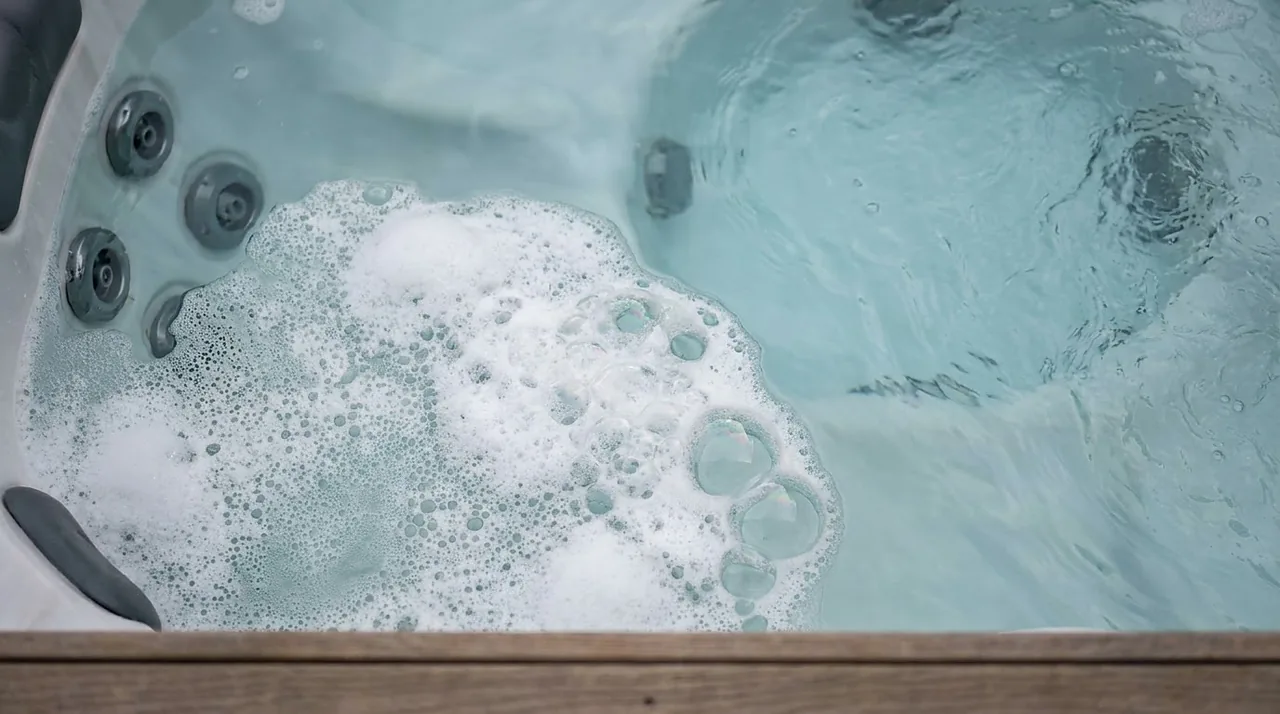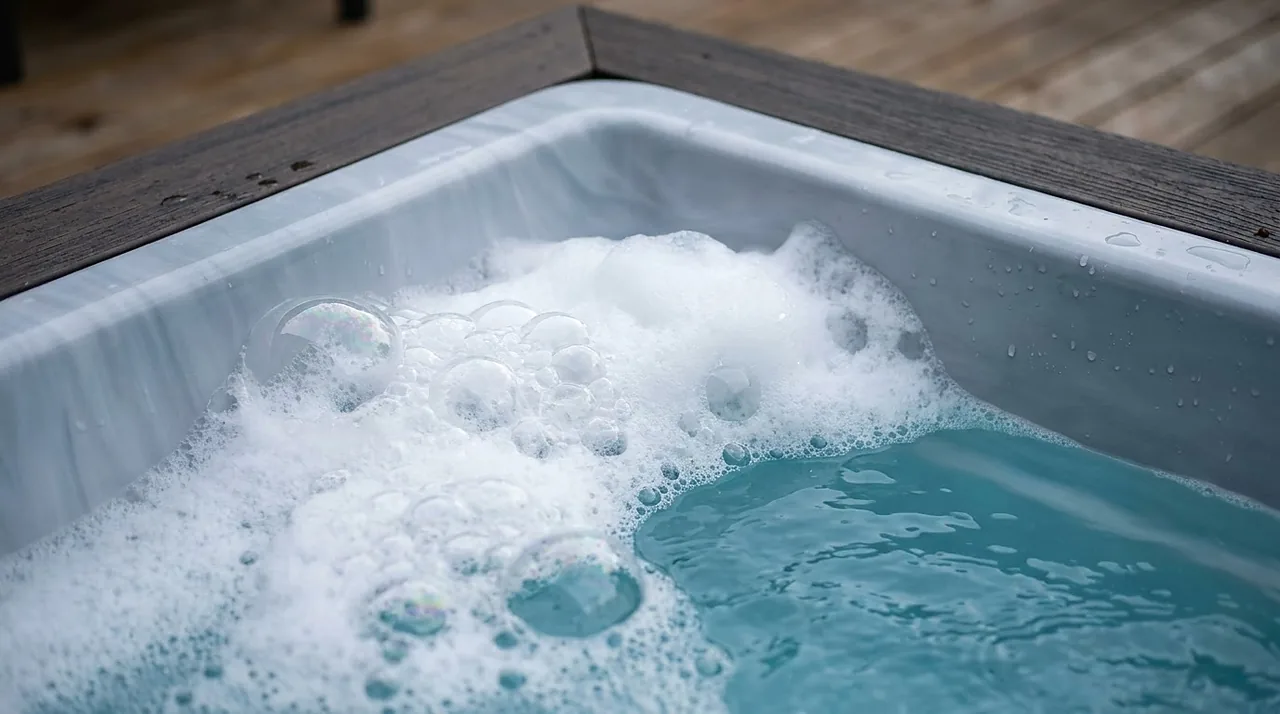
A skim of white froth collecting against the corner of a hot tub, thick enough to leave a ring around the waterline, looks worse than it is. On its own, foam is not a health hazard. It is soap-like residue riding on the surface of the water, and by itself it will not make anyone sick. But foam that keeps coming back, soak after soak, is almost never just a cosmetic quirk. It is water telling you something else is wrong, and that underlying problem is the one actually worth fixing.
What foam actually is
Foam needs two ingredients: a surfactant and agitation. A surfactant is any compound that lowers the surface tension of water, and once that tension drops, air gets trapped as bubbles instead of popping right back out. Soapy water's surface tension runs at roughly a third of plain water's, which is exactly why it holds bubbles so well (MIT's wettability research group breaks down the mechanism in plain terms). Turn on the jets in a tub loaded with surfactants and you get a froth pile in minutes; turn them off in plain water and nothing happens, because there is nothing to trap the air.
In a hot tub the surfactants come from three main places. Body oils and lotions rinse off skin the moment someone gets in, and heat and jet action only speed the release. Swimsuits washed in laundry detergent or dried with fabric softener carry a film of that surfactant straight into the water, sometimes enough on their own to foam a fresh fill. And biofilm, the slimy bacterial layer that builds up inside pipes, jets, and behind the skimmer, sheds surfactant-like byproducts as part of its own metabolism, which is why a tub can foam even when nobody has used lotion or new swimwear in weeks.
Why foam itself is not the danger

Foam is inert once it's floating on the surface. It isn't a bacterial contaminant in itself, it isn't corrosive, and it doesn't off-gas anything the way chloramine odor does. A tub with a thick foam cap can still test perfectly on chlorine, pH, and alkalinity and be fine to sit in for that one soak. Where people get uneasy is naming a body of water "safe" or "unsafe" as if it were binary. It's more useful to think of foam as a symptom, not a diagnosis: it points at something, and what it's pointing at is what determines whether the water underneath is actually a problem.
That's the real question a foamy tub raises: is this leftover detergent from one load of towels, or is the sanitizer too low to keep up with what's going into the water? Persistent foam over multiple soaks, foam that reappears within a day of clearing it, or foam alongside a musty or sulfur smell usually means the second one.
When foam is flagging a real water-quality problem

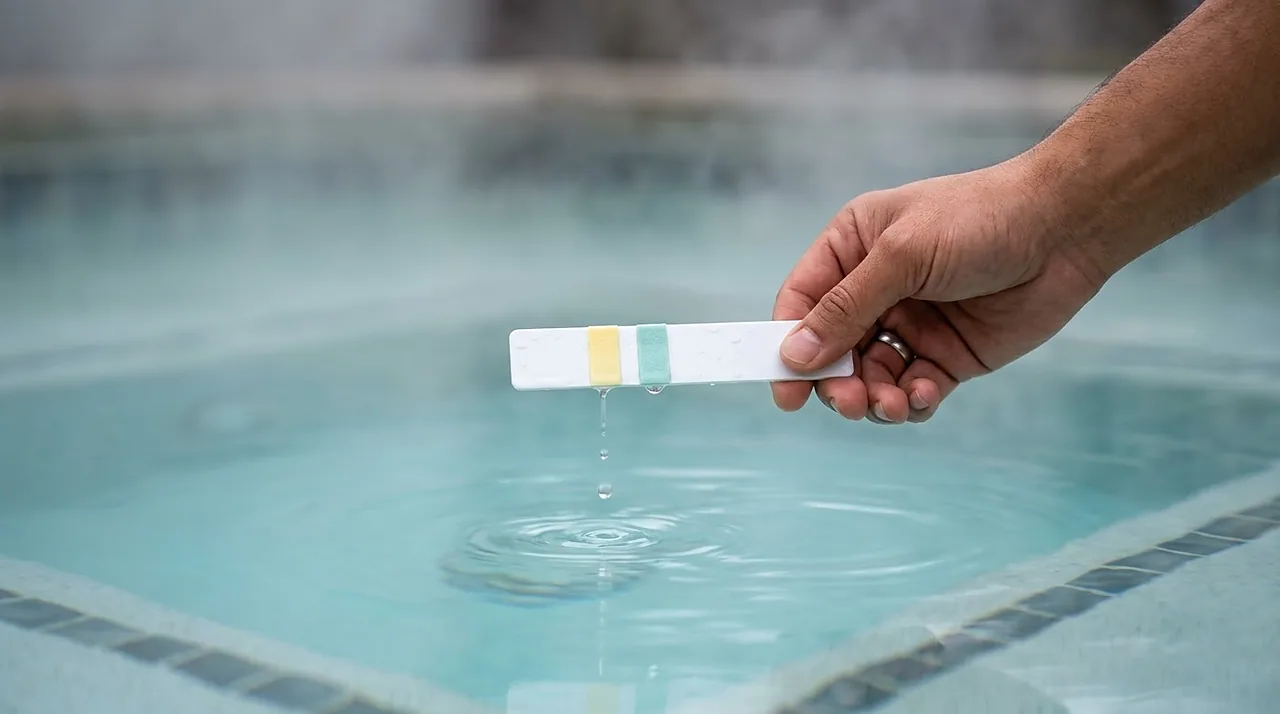
Free chlorine or bromine that's running low can't keep pace with the organic load a bather adds every time they get in. Skin cells, sweat, oils, and residual soap all need to be oxidized, and if the sanitizer residual is thin, that organic matter accumulates instead of getting broken down. More organic matter means more surfactant activity, and more surfactant activity means more foam. The problem tends to compound over time. Low sanitizer lets biofilm establish in the plumbing, and biofilm itself adds more surfactant byproducts on top of whatever the bathers brought in. A tub that foams heavily after eight or nine consecutive uses without a fresh fill, with no new detergent or lotion source, is describing exactly that spiral.
Combined chlorine is the used-up chlorine left over after it reacts with ammonia and other compounds in the water. Agencies that set pool and spa operating standards treat it as a real threshold issue, one that requires action once it crosses a set limit. The Model Aquatic Health Code sets an action level of 0.4 ppm for combined chlorine in public facilities. Past that level, operators are required to superchlorinate, exchange water, or address bather hygiene. A home tub isn't held to that code, and home owners commonly shock once combined chlorine goes above 0.5 ppm, but the logic transfers directly: once demand on the sanitizer outpaces supply, water quality degrades in ways foam is an early, visible signal of, well before it smells or looks obviously bad.
Foam right after a fresh fill
New water that foams usually means something came along with the refill: cleaner or soap left on the shell or the filter after drain day, biofilm in the lines that was not purged before draining, or very soft fill water, which foams more easily. Rinse the shell and filter well. If foam keeps returning, purge the lines.
What about skin reactions?
Some owners notice itching or a rash after a soak in foamy water and assume the foam caused it. More often the timeline points somewhere else. Documented case reports describe allergic contact dermatitis in regular hot tub users traced to potassium peroxymonosulfate, a common shock oxidizer, with flares starting within six to twelve hours of exposure and showing up on skin that sat submerged longest. That's a chemical sensitivity question, separate from foam, and it isn't something a water-care article can diagnose. If skin irritation, a rash, or breathing symptoms show up after tub use, that's a conversation for a doctor, not a chemistry adjustment.
And if it's the chlorine that's too strong?
An overdose shows up as red or stinging eyes, dry or itchy skin, and a harsh bleached feel after a soak, and usually follows a heavy shock. Test free chlorine and wait until it is back to 3-5 ppm before getting in, or see bringing high chlorine back down. If symptoms persist, see a doctor.
A quick way to sort what you're looking at

Use this to separate a one-off nuisance from something that needs attention before the next soak.
- Foam appears once, after a big group soak or fresh swimsuits. Most likely driver: Detergent or fabric softener residue, plus body oils. What it means for the water: Cosmetic; water chemistry is probably fine. Next step: Skim it off, rinse suits with plain water next time.
- Foam returns within a day of clearing it, chlorine or bromine tests low. Most likely driver: Sanitizer can't keep up with organic load. What it means for the water: Real water-quality issue, not just appearance. Next step: Rebalance and hold sanitizer at target before the next soak.
- Foam persists even with sanitizer reading in range, water smells musty or off. Most likely driver: Biofilm in the plumbing. What it means for the water: The pipes, not the water, are the source. Next step: Plan a line purge before draining and refilling.
- Rash, itching, or breathing irritation after a soak. Most likely driver: Possible chemical sensitivity, unrelated to foam directly. What it means for the water: Not something water testing can resolve. Next step: See a doctor; mention hot tub chemical exposure.
Notice that only one row on that table is about getting the foam off the surface. The other three are about the water or the plumbing behind it, and that's the distinction that actually matters here.
The two things this article isn't going to solve
Skimming, dosing, and preventing foam step by step belongs to a dedicated walkthrough: the practical fixes, from a defoamer's actual limits to how much sanitizer adjustment usually clears it, are covered at how to actually get rid of hot tub foam. And if the pattern above points at biofilm rather than a one-time detergent problem, the plumbing side, what a line purge does, when to run one, and how it's different from a normal drain and refill, is its own subject at clearing biofilm out of the jets and plumbing. Foam is the visible tip of both of those problems; neither one gets solved by skimming alone.
Bottom line on the danger question
Foam by itself will not hurt anyone. Nobody has ever been sickened by the froth. What it can indicate, when it keeps coming back, is a sanitizer that has fallen behind or a biofilm colony that's been building for months, and either of those is worth acting on for reasons that have nothing to do with how the water looks. Treat a recurring foam problem as a prompt to go check the sanitizer and the plumbing before it turns into a bigger cleanup.